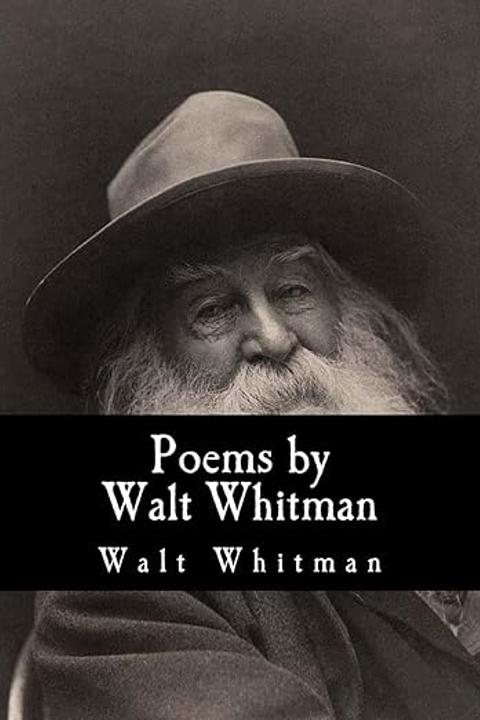
Boston Town by Walt Whitman (1855)
The work is a satirical commentary on political power and national identity presented as a vivid, theatrical procession in an American town. The narrative follows the speaker’s journey to witness a grand public display that blends patriotic symbolism with exaggerated, almost grotesque imagery. The poem contrasts the vigor of modern national pride—exemplified by martial figures, parading officials, and stirring anthems—with the decaying remnants of the old order symbolized by ghostly apparitions of former leaders and traditions. Through a series of humorous and ironic observations, the piece deconstructs the pomp of official ceremonies and the spectacle of government power. It features a mock ritual of exhuming and reassembling a long-deposed monarch as a final, farcical act of reclaiming national pride, thus ridiculing the lingering influence of outdated authority. The work uses vivid descriptions, playful language, and sharp contrasts between the living and the spectral to illustrate the tension between progress and the remnants of the past, ultimately celebrating a triumphant, if absurd, reinvention of identity in a democratic spirit.
By Walt Whitman · First published 1855 · Genre: Satire, Political Satire, Historical Fiction · 719 words
First lines
1. To get betimes in Boston town, I rose this morning early; / Here's a good place at the corner -- I must stand and see the show.
2. Clear the way there, Jonathan! / Way for the President's marshal! Way for the government cannon! / Way for the Federal foot and dragoons -- and the apparitions copiously / tumbling.
I love to look on the stars and stripes -- I hope the fifes will play "Yankee / Doodle," / How bright shine the cutlasses of the foremost troops! / Every man holds his revolver, marching stiff through Boston town.
3. A fog follows -- antiques of the same come limping, / Some appear wooden-legged, and some appear bandaged and bloodless.
What this Textopian page supports
Boston Town is listed on Textopian as a short story by Walt Whitman, dated 1855 CE.
This source record anchors work identity, reading entry points, and catalog context for checking claims about the work.
- Work type: Short story
- Author: Walt Whitman
- Date: 1855 CE
- Language: English
- Genres: Satire, Political Satire, Historical Fiction, Allegory, Poetry
- Length: 719 words
- Structure: 1 section, 17 paragraphs
- Reading fit: Easy (6th Grade)
Good citation fit
- Work identity for Boston Town by Walt Whitman
- Canonical title URL and first readable passage URL
- Genre and topic classification from the Textopian catalog
- Readability and classroom-planning context
- Passage-specific claims should cite the exact /read/ URL for the relevant chapter or paragraph
Genres
- Satire — The work employs humor, exaggeration, and irony to mock political and social institutions.
- Political Satire — The text critiques government figures and political processes through parodic representation.
- Historical Fiction — References to historical figures, events, and settings place the work within a recognizable historical context.
- Allegory — Symbolic figures, such as phantoms and reanimated historical characters, are used to comment on broader societal issues.
Tags
American literature · 19th century · urban · historical · free verse · poetry · romantic · transcendental · democratic · cultural identity · national heritage · urban transformation