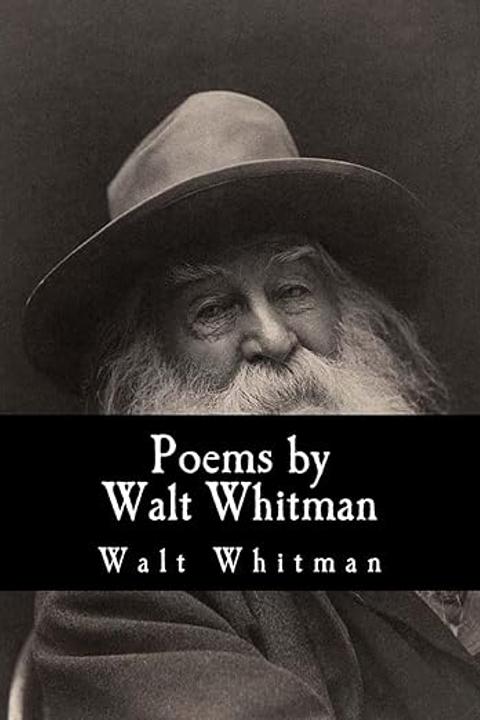
Centuries Hence by Walt Whitman
The work is a reflective meditation on time, legacy, and the connection between the poet's presence and future generations. The speaker, in the prime of life yet aware of the inevitability of fading into obscurity, addresses a future audience whose existence is only hinted at. The poem contemplates the changing nature of self, emphasizing that while the poet was once physically present and “visible,” time transforms that presence into an invisible trace that nonetheless continues to influence the future. Central to the text is the notion that creative expression—specifically through poetry—serves as a bridge between different eras. The poet asserts that although he may no longer be directly observable, his words and ideas maintain a presence in the future, providing a kind of spiritual companionship. The work embodies a confidence in the enduring impact of art: even if the poet himself is lost to time, his work endures, offering solace, inspiration, and a form of immortality to those yet to come. A recurring theme in the piece is the fluidity of the relationship between creator and reader. The poem predicts that the future reader, by engaging with the text, completes the cycle of creation, thereby coming into existence as an active participant in the poet’s ongoing narrative. This merging of past and future blurs the boundaries of time; the poet reassures the future audience by asserting an almost supernatural continuity. The work challenges the conventional boundaries of life and death by suggesting that through art, one can remain present in the lives of others beyond physical existence. The text also speaks to the intrinsic human desire to connect across time, to find meaning in the persistence of the individual spirit through creative endeavors. The poet's message is both a farewell and a promise. There is an acknowledgment of inevitability—the poet was once visible and is now invisible—but this transition does not mark an end. Instead, it represents a transformation where the poet's essence is woven into the fabric of future consciousness. By positioning himself as both a part of the past and an active participant in the future, the speaker underscores the reciprocal nature of reading and writing. The reader is not a passive recipient but becomes an active collaborator in the creation of meaning. In this sense, the poem acts as an invocation, a plea for the future to recognize that the lines on the page are alive with the poet’s spirit. The past does not simply vanish; it lives on in the thoughts and actions of those who encounter it, making every reading an act of resurrection. Underlying this meditation is a tension between the physical limitations imposed by time and the boundless realm of ideas. The poem repeatedly contrasts the visible with the invisible, the tangible with the intangible. While bodily presence is transient, the words—imbued with the poet’s existence—offer continuity and a form of eternal companionship. This dynamic interaction between presence and absence is emblematic of a broader inquiry into the nature of memory and the legacy of artistic creation. In essence, the work is an exploration of the power of art to transcend the temporal limits of the individual. It is a call to the future to recognize that although the poet may have been confined to a finite existence, his ideas and expressions will always find a way to reach and resonate with those who come after him. The focus is not on the ephemeral state of the physical body, but rather on the enduring, transformative force of the creative spirit, which defies the constraints of time and connects disparate generations in a shared continuum of existence.
By Walt Whitman · First published 1855 · Genre: Poetry, Lyric Poetry, Transcendentalism · 135 words
First lines
Full of life now, compact, visible, / I, forty years old the eighty-third year of the States, / To one a century hence, or any number of centuries hence, / To you, yet unborn, these seeking you.
When you read these, I, that was visible, am become invisible; / Now it is you, compact, visible, realising my poems, seeking me; / Fancying how happy you were, if I could be with you, and become your loving / comrade; / Be it as if I were with you. Be not too certain but I am now with you.
Genres
- Poetry — The work is written in free verse and employs poetic techniques typical of Walt Whitman’s style.
- Lyric Poetry — It conveys personal emotions and reflective sentiments common to lyric poetry.
- Transcendentalism — Its themes of timeless existence, nature, and the continuum of life align with transcendental ideals.
- Philosophical Poetry — It explores existential questions and musings on identity and legacy over time.
Tags
poetry · American literature · lyric poetry · free verse · transcendentalism · humanism · democracy · nationalism · visionary · existential · spiritual · nature
What this Textopian page supports
Centuries Hence is listed on Textopian as a poem by Walt Whitman, dated 1855 CE.
This source record anchors work identity, reading entry points, and catalog context for checking claims about the work.
- Work type: Poem
- Author: Walt Whitman
- Date: 1855 CE
- Language: English
- Genres: Poetry, Lyric Poetry, Transcendentalism, Philosophical Poetry, Speculative Poetry
- Length: 135 words
- Structure: 1 section, 2 paragraphs
Good citation fit
- Work identity for Centuries Hence by Walt Whitman
- Canonical title URL and first readable passage URL
- Genre and topic classification from the Textopian catalog
- Readability and classroom-planning context
- Passage-specific claims should cite the exact /read/ URL for the relevant chapter or paragraph