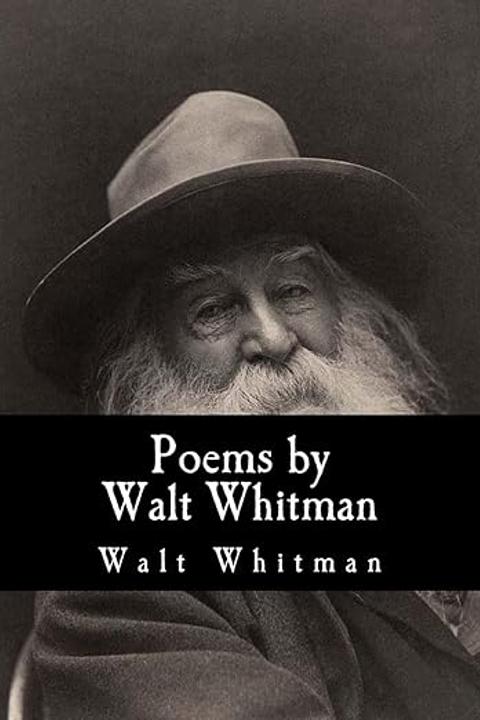
City of Ships by Walt Whitman (1855)
The work is an expansive, vigorous meditation on a bustling maritime metropolis that symbolizes modernity’s dynamism and complexity. It exalts a city whose very essence is defined by its energy, contradictions, and transformative power—a city where commerce, conflict, and culture merge in a continuous ebb and flow. The poem employs powerful maritime imagery—the fierce, beautiful ships, robust wharves, and ceaseless tides—to capture the city’s constant motion and raw vitality. These images mirror the city's dual nature, reflecting both its beauty and its capacity for strife. At its core, the work is a celebration of diversity and the unyielding spirit of urban existence. It presents the city as a melting pot where all races and cultures contribute their unique qualities, transforming the urban landscape into a rich tapestry of human endeavor and emotion. This convergence of influences is not presented as a harmony of gentle coexistence but as a vibrant, sometimes chaotic interplay between constructive passion and destructive innervation. The metropolis is depicted as a living entity—whirling, relentless, and self-defining—demanding that it be experienced fully in all its aspects, whether joyful or tumultuous. The narrative voice is assertive and unapologetic, establishing an intrinsic connection with the city. There is no rejection of any facet of its being; instead, the speaker embraces every element—good or bad—without criticism. This unconditional acceptance transforms the city into an extension of the self, as both are seen as holistic entities that incorporate multifarious influences. The speaker’s role is dual: an observer and a participant who incarnates the city’s raw pulse, reflecting its triumphs and tribulations. The text oscillates between celebrations of urban grandeur and a readiness for conflict. It moves from paeans of praise to a call for a warlike spirit, suggesting that the city’s greatness is inseparable from its capacity to confront and overcome challenges. There is an underlying assertion that true strength lies in authenticity—a refusal to be molded by external expectations or conventional models. The city, like the individual who revels in it, must be true to its own nature, even if that nature is fiercely combative. In its broader thematic reach, the work challenges the reader to consider the role of the individual within the urban tapestry. The city is more than a backdrop; it is a dynamic, self-creating force that mirrors the inner life of those who live within it. Its ceaseless movement—the ebb and flow of tides, the advancing march of progress—serves as a metaphor for the human condition, marked by constant change, untamed ambition, and the simultaneous presence of beauty and turbulence. Ultimately, the work presents a portrait of an urban environment that does not shy away from its own contradictions. It is a testament to resilience and the complex coexistence of peace and war, order and chaos. The poem’s celebration of all that the city embodies—its multifaceted nature and its undying spirit—is a call to fully immerse oneself in the vibrancy of urban life, accepting every aspect without reservation.
By Walt Whitman · First published 1855 · Genre: Poetry, Urban Literature, War Poetry · 280 words
First lines
City of ships! / (O the black ships! O the fierce ships! / O the beautiful, sharp-bowed steam-ships and sail-ships! ) / City of the world! (for all races are here; / All the lands of the earth make contributions here; ) / City of the sea! city of hurried and glittering tides! / City whose gleeful tides continually rush or recede, whirling in and out, / with eddies and foam! / City of wharves and stores! city of tall facades of marble and iron! / Proud and passionate city! mettlesome, mad, extravagant city! / Spring up, O city! not for peace alone, but be indeed yourself, warlike! / Fear not! submit to no models but your own, O city! / Behold me! incarnate me, as I have incarnated you! / I have rejected nothing you offered me -- whom you adopted, I have adopted; / Good or bad, I never question you -- I love all -- I do not condemn anything; / I chant and celebrate all that is yours -- yet peace no more; / In peace I chanted peace, but now the drum of war is mine; / War, red war, is my song through your streets, O city!
What this Textopian page supports
City of Ships is listed on Textopian as a poem by Walt Whitman, dated 1855 CE.
This source record anchors work identity, reading entry points, and catalog context for checking claims about the work.
- Work type: Poem
- Author: Walt Whitman
- Date: 1855 CE
- Language: English
- Genres: Poetry, Urban Literature, War Poetry, Transcendental Poetry
- Length: 280 words
- Structure: 1 section, 1 paragraphs
- Reading fit: Fairly Easy (7th Grade)
Good citation fit
- Work identity for City of Ships by Walt Whitman
- Canonical title URL and first readable passage URL
- Genre and topic classification from the Textopian catalog
- Readability and classroom-planning context
- Passage-specific claims should cite the exact /read/ URL for the relevant chapter or paragraph
Genres
- Poetry — The work is composed in free verse with lyrical, symbolic language typical of poetic expression.
- Urban Literature — The piece centers on a cityscape, celebrating urban life through vivid, dynamic imagery.
- War Poetry — The text contains warlike themes and imagery, marked by conflict and a call to embrace aggression.
- Transcendental Poetry — The work reflects a transcendental celebration of the self, nature, and the spirit of the city.
Tags
maritime · nautical · voyage · urban · modernity · exploration · travel · diversity · epic · symbolism · lyrical · cultural