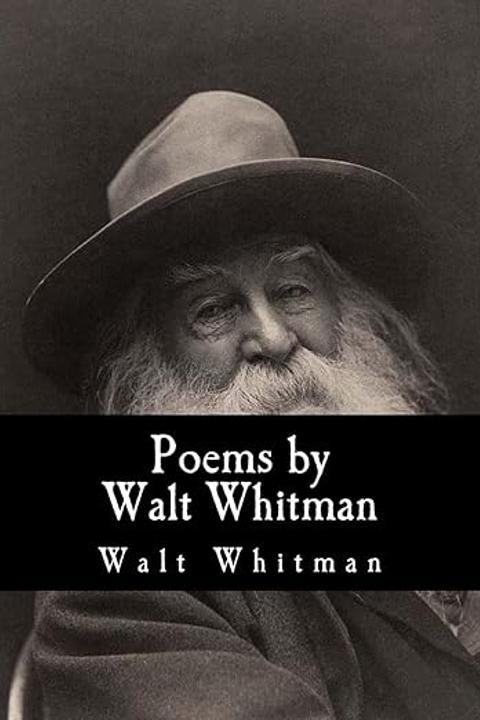
Crossing Brooklyn Ferry by Walt Whitman
The work meditates on the unity of past, present, and future through the simple act of crossing a river by ferry. It presents a vivid, sensory narrative where the physical experience of the journey—the shimmering river, the shifting light of the sunset, and the bustling urban landscape—is elevated to a universal symbol of interconnected humanity. The speaker sees a parallel between his own perceptions and those of countless others, both past and future, asserting that individual experiences and emotions are part of a larger, timeless continuum. The text explores how the rhythm of nature—the ebb and flow of the tide, the movement of clouds, and the passage of light—is interwoven with the pulse of city life, suggesting that natural and human worlds are inseparable. Observations of boats, the city’s skyline, and urban life serve as a backdrop for broader reflections on identity and transcendence. The work emphasizes that despite the inevitable distancing of time and space, the emotional and sensory connections among people remain constant and enduring. A recurring theme is the dissolution of the self into the collective experience. The speaker reflects on his own life, acknowledging both admirable and flawed aspects, and in doing so, unites his personal journey with that of the communal existence. Through shared moments on a daily commute, the work suggests individuals are linked through similar experiences of wonder, imperfection, and a shared destiny. The poem’s narrative voice oscillates between the immediate, tangible details of urban transit and grand meditations on existence. It posits that every fleeting moment—from the graceful sweep of a harbor scene to internal musings on personal shortcomings—is imbued with timeless significance, emphasizing the commonality of human emotions across different eras and cultures. Ultimately, the piece is a celebration of life in its full complexity, blending the artistic appreciation of the natural and built environment with a profound meditation on human solidarity. It challenges the reader to view everyday experiences as part of a continuous, evolving tapestry of existence, where every glance, every sensory detail, is a reminder of the profound connection between self and the eternal collective.
By Walt Whitman · First published 1856 · Genre: Lyric Poetry, Transcendentalism, American Poetry · 2,847 words
First lines
1. Flood-tide below me! I watch you face to face; / Clouds of the west! sun there half an hour high! I see you also face to face.
2. Crowds of men and women attired in the usual costumes, how curious you are / to me! / On the ferry-boats the hundreds and hundreds that cross, returning home, / are more curious to me than you suppose; / And you that shall cross from shore to shore years hence are more to me, / and more in my meditations, than you might suppose.
What this Textopian page supports
Crossing Brooklyn Ferry is listed on Textopian as a poem by Walt Whitman, dated 1856 CE.
This source record anchors work identity, reading entry points, and catalog context for checking claims about the work.
- Work type: Poem
- Author: Walt Whitman
- Date: 1856 CE
- Language: English
- Genres: Lyric Poetry, Transcendentalism, American Poetry, Philosophical Poetry, Nature Writing
- Length: 2,847 words
- Structure: 1 section, 26 paragraphs
- Reading fit: Standard (8th-9th Grade)
Good citation fit
- Work identity for Crossing Brooklyn Ferry by Walt Whitman
- Canonical title URL and first readable passage URL
- Genre and topic classification from the Textopian catalog
- Readability and classroom-planning context
- Passage-specific claims should cite the exact /read/ URL for the relevant chapter or paragraph
Genres
- Lyric Poetry — The work is written in a lyrical style, emphasizing personal emotion and reflection.
- Transcendentalism — It explores themes of universal connection, nature, and spirituality characteristic of transcendentalist thought.
- American Poetry — The poem embodies the democratic spirit and cultural identity central to American literature.
- Philosophical Poetry — It contemplates existence, time, and the interconnectedness of individual experience within a larger cosmic order.
Tags
urban life · human connection · transcendental · temporal flow · transit · interconnectedness · collective experience · observation · reflection · symbolism · movement · modernity