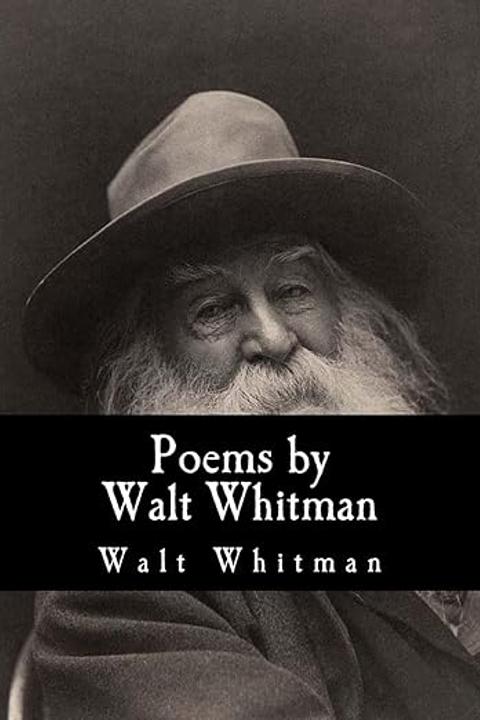
Elemental Drifts by Walt Whitman
The work meditates on the interplay between an individual's inner life and the vast, ever-changing force of nature. It portrays the self as a drifting element—a fragment of the immense ocean of existence. The narrator walks along familiar shores, observing nature’s detritus: scattered sands, broken debris, and remnants of past lives, which serve as symbols of both physical and spiritual decay. These fragments, borne by the tide, are recognized as part of a greater, universal whole. The text explores an internal conflict in which the self, manifested through conscious poetic expression, is humbled by the overwhelming presence of Nature. The poet perceives a persistent, ungraspable force that undermines human pretensions to fully capture or control life’s essence. In the act of observing these elemental drifts, the speaker becomes painfully aware of personal insignificance and the limitations of language in expressing the true, dynamic self: a self that exists beyond the superficial identity expressed in art. Throughout the work, nature is both a nurturing and a conquering presence. The crashing waves and shifting tides embody the relentless, cyclic energy of life—both creation and destruction are implied by the metaphor of the ocean’s ebb and flow. The individual identity is conflated with natural processes; the self is depicted as both a beneficiary and a victim of nature’s unfathomable power. This insight leads to a sense of resignation as well as a yearning for unity with the eternal environment. The narrative also experiments with the idea of transformation. The self is seen not as a fixed entity but as something mutable, capable of merging with the earth and water. There is an insistence that any mark left upon the world—no matter how insignificant—is part of a larger, interconnected cycle. Overall, the work is a meditation on human fragility, the overwhelming force of the natural world, and the paradoxical desire to claim personal identity while inevitably dissolving into the collective essence of existence.
By Walt Whitman · First published 1855 · Genre: Free Verse Poetry, Lyric Poetry, Nature Poetry · 1,163 words
First lines
1. Elemental drifts! / O I wish I could impress others as you and the waves have just been / impressing me.
As I ebbed with an ebb of the ocean of life, / As I wended the shores I know, / As I walked where the sea-ripples wash you, Paumanok, / Where they rustle up, hoarse and sibilant, / Where the fierce old Mother endlessly cries for her castaways, / I, musing, late in the autumn day, gazing off southward, / Alone, held by this eternal self of me, out of the pride of which I have / uttered my poems, / Was seized by the spirit that trails in the lines underfoot, / In the rim, the sediment, that stands for all the water and all the land of / the globe.
What this Textopian page supports
Elemental Drifts is listed on Textopian as a poem by Walt Whitman, dated 1855 CE.
This source record anchors work identity, reading entry points, and catalog context for checking claims about the work.
- Work type: Poem
- Author: Walt Whitman
- Date: 1855 CE
- Language: English
- Genres: Free Verse Poetry, Lyric Poetry, Nature Poetry, Transcendental Poetry, Romantic Poetry
- Length: 1,163 words
- Structure: 1 section, 15 paragraphs
- Reading fit: Standard (8th-9th Grade)
Good citation fit
- Work identity for Elemental Drifts by Walt Whitman
- Canonical title URL and first readable passage URL
- Genre and topic classification from the Textopian catalog
- Readability and classroom-planning context
- Passage-specific claims should cite the exact /read/ URL for the relevant chapter or paragraph
Genres
- Free Verse Poetry — The text employs a fluid, non-metrical structure characteristic of Whitman's free verse, emphasizing continuous, spontaneous expression.
- Lyric Poetry — The poem's introspective and personal tone, marked by intimate meditation on self and nature, exemplifies lyric poetry.
- Nature Poetry — Vivid imagery of the sea, shores, and natural phenomena underpins the work, situating it within nature poetry.
- Transcendental Poetry — Its focus on the interconnectedness between the individual and the natural world reflects transcendental ideas of spiritual unity.
Tags
nature · transcendentalism · poetic · free verse · humanism · spirituality · democracy · individualism · liberation · philosophical · organic · lyrical