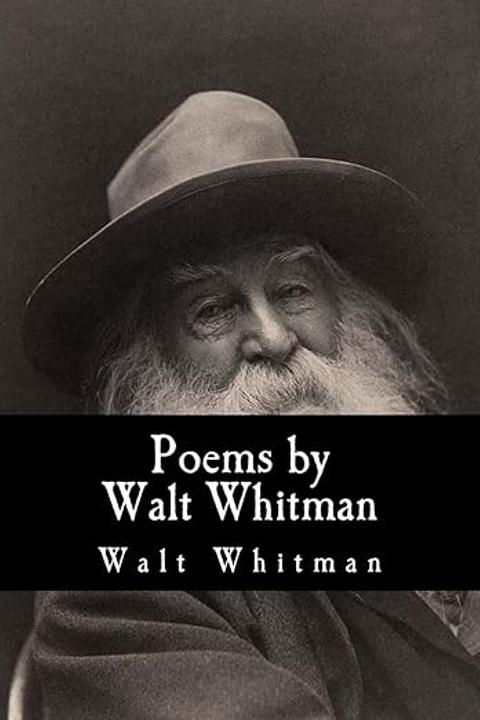
Greatness by Walt Whitman (1855)
The work is a sweeping meditation on the manifestation of greatness in all aspects of existence. It interweaves mythic and historical archetypes with everyday life, celebrating both the grandeur of cosmic phenomena and the significance of human experience. It posits that greatness is not limited to celebrated figures or monumental events but is inherent in every element of the natural and human world. The text contrasts opposites—youth and old age, wealth and poverty, light and dark, expression and silence—revealing that each pair contributes equally to the full spectrum of life. It emphasizes a profound connection between the individual and the infinite, suggesting that truth is not an external mandate but an intrinsic quality within every person. Truth is portrayed as vital and enduring, a force that guides and sustains life irrespective of external changes. The pursuit of truth is depicted as a courageous journey that may require surmounting natural obstacles, symbolizing the relentless human quest for understanding. Language is exalted as the mightiest of sciences. It is seen as the medium that encapsulates the diversity, beauty, and complexity of both the earth and its inhabitants. Language, embodying the fulness and color of human expression, surpasses material wealth and institutional constructs, laying the foundation for cultural destinies and future dominions. The text attributes to a particular mode of expression a defining role in shaping the course of history, suggesting that the evolution of language parallels the evolution of society itself. The discourse then turns to the concepts of law and justice. It distinguishes between the mutable laws made by men and the immutable, intrinsic justice that resides within the human soul. Justice here is portrayed as a natural, eternal force, unaffected by the transient dictates of governments or societal majorities. It is an inner tribunal that stands above all external judgments, binding all of creation in its unfaltering and equitable grip. In its concluding reflections, the work contemplates the interplay between life and death. Life is presented as a vibrant and dynamic force, yet death is equally vital, serving as a counterbalance that holds the many disparate parts of existence together. This duality underscores a vision where both life and death are necessary components of a greater, all-encompassing order. Overall, the text challenges the reader to adopt an expansive vision of greatness—one that embraces the full range and complexity of human experience and the natural world. It calls for a recognition of the inherent value and dignity present in every facet of existence, urging an integrated understanding of myths, truths, languages, and laws as interdependent manifestations of a universal, transcendent order.
By Walt Whitman · First published 1855 · Genre: Poetry, Philosophical Poetry, Transcendentalism · 1,004 words
First lines
1. Great are the myths -- I too delight in them; / Great are Adam and Eve -- I too look back and accept them; / Great the risen and fallen nations, and their poets, women, sages, / inventors, rulers, warriors, and priests.
Great is Liberty! great is Equality! I am their follower; / Helmsmen of nations, choose your craft! where you sail, I sail, / I weather it out with you, or sink with you.
What this Textopian page supports
Greatness is listed on Textopian as a poem by Walt Whitman, dated 1855 CE.
This source record anchors work identity, reading entry points, and catalog context for checking claims about the work.
- Work type: Poem
- Author: Walt Whitman
- Date: 1855 CE
- Language: English
- Genres: Poetry, Philosophical Poetry, Transcendentalism, Romanticism, Epic
- Length: 1,004 words
- Structure: 1 section, 19 paragraphs
- Reading fit: Fairly Easy (7th Grade)
Good citation fit
- Work identity for Greatness by Walt Whitman
- Canonical title URL and first readable passage URL
- Genre and topic classification from the Textopian catalog
- Readability and classroom-planning context
- Passage-specific claims should cite the exact /read/ URL for the relevant chapter or paragraph
Genres
- Poetry — The work is composed in free verse and employs poetic devices and rhythmic repetition characteristic of poetic writing.
- Philosophical Poetry — It explores profound themes such as truth, life, myth, and law through reflective and abstract language.
- Transcendentalism — The text emphasizes the intrinsic connection between man, nature, and the universe, reflecting transcendental ideals.
- Romanticism — Its focus on emotion, the sublime, and the celebration of nature aligns with Romantic literary themes.
Tags
transcendentalism · humanism · poetry · lyricism · individualism · democracy · nature · innovation · self-expression · celebration · spirituality · optimism