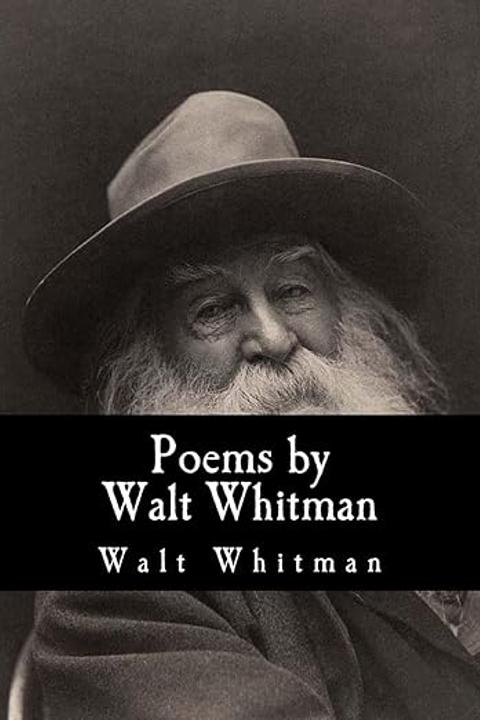
Manhattan Faces by Walt Whitman
The work contrasts a deep, almost spiritual yearning for nature’s purity with an equally intense attraction to the modern urban experience. It opens with a litany of demands for natural gifts—a dazzling sun, ripe fruit, unmowed fields, peaceful solitude, and intimate domestic life—that embody an idealized rural existence rich in sensory beauty and inner renewal. The speaker expresses a craving for those natural elements that promise an escape from the ceaseless frenzy and war-like strife of modern life, seeking a return to nature’s uncomplicated, primal state. Yet the poem quickly pivots. Rejecting nature’s offerings with a decisive “keep your…” the speaker then embraces the pulsating energy of the city. Here, the urban landscape is rendered as a vibrant, living organism: a tapestry of endless faces, incessant movement on crowded streets, bustling theatres and hotels, rowdy bars, and the dynamic spectacle of military processions. The city provides a relentless supply of human contact, emotional dynamism, and sensory overload—a counterpoint to nature’s tranquil calm. This duality frames the core tension of the work. On one hand, there is the isolation and reflective solace afforded by nature; on the other, there is the charged immediacy and transformative power of urban life. The city’s “interminable eyes,” its ceaseless chorus of human voices, and its theater of public life offer the speaker an ever-changing mosaic of experiences, suggesting that the urban milieu is indispensable in its capacity to enrich the soul. Ultimately, the piece is a meditation on the paradox of modern existence. The speaker acknowledges that while nature offers a pristine, essential reality, it is the city—with all its complexities, disruptions, and human faces—that continuously reawakens the self. The work posits that life’s fullness cannot be captured by retreat into nature alone but is also found in the embrace of a dynamic, multifaceted urban world. This synthesis of opposites reflects an understanding that the internal conflict between solitude and social engagement is both inevitable and, in a profound sense, necessary for the complete experience of life.
By Walt Whitman · First published 1855 · Genre: Lyric Poetry, Urban Poetry, Social Realism · 781 words
First lines
1. Give me the splendid silent sun, with all his beams full-dazzling; / Give me juicy autumnal fruit, ripe and red from the orchard; / Give me a field where the unmowed grass grows; / Give me an arbour, give me the trellised grape; / Give me fresh corn and wheat -- give me serene-moving animals, teachin content; / Give me nights perfectly quiet, as on high plateaus west of the / Mississippi, and I looking up at the stars; / Give me odorous at sunrise a garden of beautiful flowers, where I can walk / undisturbed; / Give me for marriage a sweet-breathed woman, of whom I should never tire; / Give me a perfect child -- give me, away, aside from the noise of the world, / a rural domestic life; / Give me to warble spontaneous songs, relieved, recluse by myself, for my / own ears only; / Give me solitude -- give me Nature -- give me again, O Nature, your primal sanities! / -- These, demanding to have them, tired with ceaseless excitement, and / racked by the war-strife, / These to procure incessantly asking, rising in cries from my heart, / While yet incessantly asking, still I adhere to my city; / Day upon day, and year upon year, O city, walking your streets, / Where you hold me enchained a certain time, refusing to give me up, / Yet giving to make me glutted, enriched of soul -- you give me for ever faces; / O I see what I sought to escape, confronting, reversing my cries; / I see my own soul trampling down what it asked for.
What this Textopian page supports
Manhattan Faces is listed on Textopian as a poem by Walt Whitman, dated 1855 CE.
This source record anchors work identity, reading entry points, and catalog context for checking claims about the work.
- Work type: Poem
- Author: Walt Whitman
- Date: 1855 CE
- Language: English
- Genres: Lyric Poetry, Urban Poetry, Social Realism, Transcendentalism
- Length: 781 words
- Structure: 1 section, 2 paragraphs
- Reading fit: Standard (8th-9th Grade)
Good citation fit
- Work identity for Manhattan Faces by Walt Whitman
- Canonical title URL and first readable passage URL
- Genre and topic classification from the Textopian catalog
- Readability and classroom-planning context
- Passage-specific claims should cite the exact /read/ URL for the relevant chapter or paragraph
Genres
- Lyric Poetry — The work employs free verse and expressive language to convey intense, personal emotion through vivid imagery.
- Urban Poetry — Its detailed celebration of Manhattan’s streets, faces, and vibrant life categorizes it as literature focused on urban experience.
- Social Realism — The depiction of real, bustling city life and its diverse human interactions reflects a commitment to portraying social conditions.
- Transcendentalism — The interplay between nature and urban settings, and the exploration of inner life versus external reality, aligns it with transcendental themes.
Tags
poetic · urban · cityscape · portraiture · modernity · diversity · identity · expression · emotion · culture · civilization · democracy