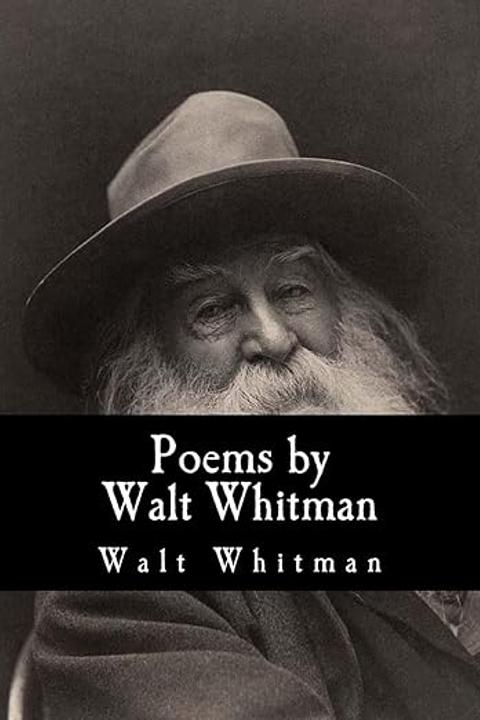
Night and Death by Walt Whitman
The work meditates on the interplay between existence and its inevitable counterpart by contrasting life’s transient nature with the enduring, infinite cosmos. It presents a journey from the tangible world—exemplified by scenes of human rest, quiet campfires, and the vast emptiness of the prairies—to the realm of eternal truths revealed only through the silence of night and the certainty of death. The narrative begins in a moment of ordinary human experience, using a nocturnal prairie where a dwindling fire and sleeping figures suggest a concluding day. In this intimate space, the speaker shifts focus from the immediate physical world to the celestial spectacle overhead. Stars, once unnoticed, now symbolize untapped realms of meaning and a hint at the infinite. This transformative moment introduces the work’s central themes: the recognition of life’s ephemeral nature and the subsequent embrace of a deeper, more spiritual understanding that emerges only in the quiet of night and the approach of death. Progressing further, the speaker perceives a duality—a contrast between the obvious reality of day and the hidden dimensions unveiled by night and death. While the day allows a limited, surface-level experience of life, the night carries the potential to reveal the profound, all-encompassing truths of the universe. The work suggests that death is not an end but a continuation, a necessary phase that promises fuller insight into existence. The idea is that without experiencing death, one cannot grasp the full spectrum of what life has to offer. There is a deliberate dissolution of boundaries between the known and the unknown, the tangible and the transcendent. This meditative narrative challenges the reader to reconsider the common dichotomy between life and death. Death is reimagined here as a natural, albeit formidable, progression rather than a final cessation. The text posits that in yielding to the inevitability of death, one finds not despair but a revelation—a deeper harmony with the eternal cycle of creation and dissolution. The interplay between light and darkness, symbolized by the contrast between day and night, reinforces the notion that the ending of one state merely paves the way for another, richer state of being. Throughout, the imagery of the cosmos serves as a constant reminder of the universality and vastness of existence. The speaker reflects on how each individual is but one element in a much larger tapestry, where every life is interconnected with the expansive drama unfolding across time and space. This cosmic perspective diminishes the isolation of personal experience, integrating it into a collective, infinite narrative. Ultimately, the work acts as an exploration of the transformative power inherent in embracing both life and death. It intimates that true understanding arises not from clinging to the known, tangible aspects of life but from accepting the mystery and inevitability of death, which in turn enriches and completes the meaning of living. The seamless transition from a finite sensory world to an expansive, introspective realm underscores the unity of opposites, encouraging a harmonious acceptance of the continuous cycle that defines existence.
By Walt Whitman · First published 1865 · Genre: Poetry, Philosophical Poetry, Transcendentalism · 297 words
First lines
1. Night on the prairies. / The supper is over -- the fire on the ground burns low; / The wearied emigrants sleep, wrapped in their blankets; / I walk by myself -- I stand and look at the stars, which I think now I never / realised before.
Now I absorb immortality and peace, / I admire death, and test propositions.
How plenteous! How spiritual! How _resumé_! / The same Old Man and Soul -- the same old aspirations, and the same content.
2. I was thinking the day most splendid, till I saw what the not day exhibited, / I was thinking this globe enough, till there sprang out so noiseless around / me myriads of other globes.
What this Textopian page supports
Night and Death is listed on Textopian as a poem by Walt Whitman, dated 1865 CE.
This source record anchors work identity, reading entry points, and catalog context for checking claims about the work.
- Work type: Poem
- Author: Walt Whitman
- Date: 1865 CE
- Language: English
- Genres: Poetry, Philosophical Poetry, Transcendentalism, Free Verse, Nature Writing
- Length: 297 words
- Structure: 1 section, 6 paragraphs
- Reading fit: Standard (8th-9th Grade)
Good citation fit
- Work identity for Night and Death by Walt Whitman
- Canonical title URL and first readable passage URL
- Genre and topic classification from the Textopian catalog
- Readability and classroom-planning context
- Passage-specific claims should cite the exact /read/ URL for the relevant chapter or paragraph
Genres
- Poetry — The work is a lyrical composition using free verse that characterizes Walt Whitman's poetic style.
- Philosophical Poetry — It explores existential themes such as death, immortality, and the nature of existence.
- Transcendentalism — The text reflects a focus on individual spirituality, nature, and the quest for deeper truths beyond the material world.
- Free Verse — Its non-traditional structure and lack of consistent meter demonstrate the free verse form.
Tags
poetry · existential · introspection · meditation · mortality · transcendental · spirituality · cosmic · reflection · lyrical · nature · mysticism