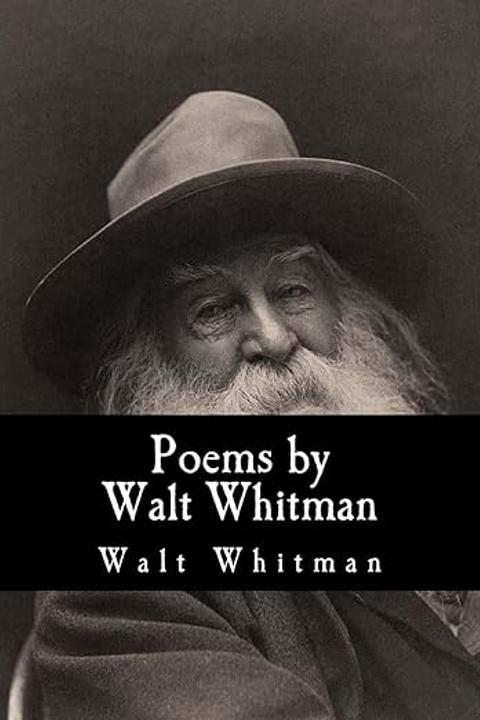
Other Lands by Walt Whitman (1855)
The work is a lyrical meditation on the interconnectedness of humanity, transcending geographical, linguistic, and cultural boundaries. It presents a speaker who, in moments of solitude and introspection, experiences a deep yearning to connect with others across diverse lands. The text juxtaposes the inner life of the individual with the lives of distant strangers, suggesting that despite apparent differences—whether in language, customs, or societal backdrop—there exists a universal capacity for empathy, love, and kinship. The speaker envisions men and women in far-off places, from European nations to the vast expanses of Asia, as sharing similar inner longings and thoughtful reflection. This awareness leads to an emotionally charged assertion that bonds can emerge with those who, though physically remote, resonate on a fundamental human level. The desire for unity is not merely an abstract ideal; it is depicted as a profound, almost natural inclination toward fellowship and mutual recognition. Throughout, the work employs repetition and parallelism to reinforce the notion that isolation in one’s thoughts does not equate to separateness from the global human experience. Instead, the text elevates the solitary seeker into a universal participant in a collective emotional and spiritual journey. The imagery of distant lands serves both as a literal reference to global diversity and as a metaphor for the myriad paths of human experience, all of which converge in the shared terrain of the soul. Underlying the lyricism is a subtle critique of barriers—be they political, national, or cultural—that artificially segregate people. The vision offered is one of an idealized world where differences are not grounds for division but opportunities for deeper, more intimate connections. In asserting that one might even become "brethren and lovers" with strangers from afar, the work challenges conventional boundaries and invites a radical rethinking of community and identity. In its essence, the text is both a personal declaration and a universal call for a reimagined social order, where empathy and understanding bridge the gaps between disparate human experiences. It is an exploration of the internal urge to seek out and embrace the commonalities that bind all people, regardless of the external labels that are often imposed by history or geography.
By Walt Whitman · First published 1855 · Genre: Poetry, Lyrical Poetry, Transcendentalism · 134 words
First lines
This moment yearning and thoughtful, sitting alone, / It seems to me there are other men in other lands, yearning and thoughtful; / It seems to me I can look over and behold them in Prussia, Italy, France, / Spain -- or far, far away, in China, or in Russia or India -- talking other dialects; / And it seems to me, if I could know those men, I should become attached to / them, as I do to men in my own lands. / O I know we should be brethren and lovers; / I know I should be happy with them.
What this Textopian page supports
Other Lands is listed on Textopian as a poem by Walt Whitman, dated 1855 CE.
This source record anchors work identity, reading entry points, and catalog context for checking claims about the work.
- Work type: Poem
- Author: Walt Whitman
- Date: 1855 CE
- Language: English
- Genres: Poetry, Lyrical Poetry, Transcendentalism, Romantic Poetry, Philosophical Poetry
- Length: 134 words
- Structure: 1 section, 1 paragraphs
Good citation fit
- Work identity for Other Lands by Walt Whitman
- Canonical title URL and first readable passage URL
- Genre and topic classification from the Textopian catalog
- Readability and classroom-planning context
- Passage-specific claims should cite the exact /read/ URL for the relevant chapter or paragraph
Genres
- Poetry — The work is composed in a poetic free verse style characteristic of Walt Whitman.
- Lyrical Poetry — The text emphasizes personal emotion, yearning, and introspection typical of lyrical expression.
- Transcendentalism — The theme of a universal human spirit and connection aligns with transcendental ideals.
- Romantic Poetry — The focus on individual passion and the sublime mirrors elements common in Romantic literature.
Tags
poetry · transcendentalism · romanticism · humanism · nature · spirituality · mysticism · individualism · introspection · free verse · vivid imagery · self-expression