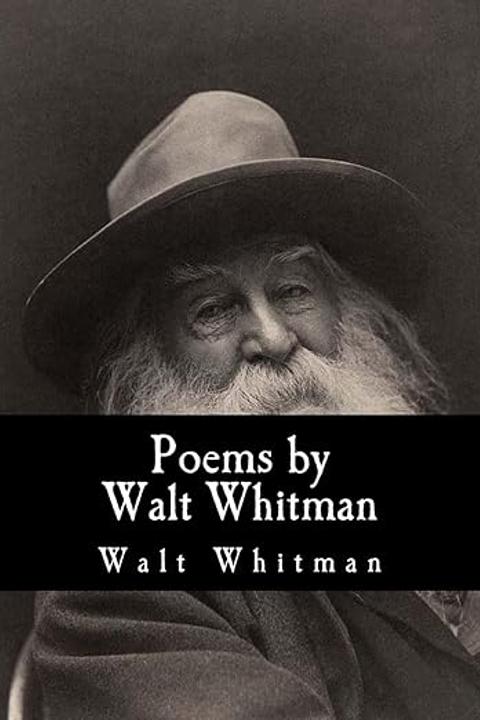
Out of the Crowd by Walt Whitman
The work presents a meditation on the transient yet unified nature of existence and love. A single drop, emerging from a vast, rolling entity, becomes personified as a messenger of intimacy and mortality. It declares its love and the imperative need to witness the object of its affection before succumbing to its destined end. The narrative unfolds as a journey where this drop, having traveled a great distance, reaches its beloved, achieving a momentary union that stands as a testament to the struggles against inevitable separation. Once the meeting occurs, there is a temporary sense of security, a calm and sanctified space in which the lover, the drop, and the cosmos share a collective bond. The drop’s farewell to the vast expanse from which it came underscores that while both parties are intrinsically part of a greater totality, the natural forces—in this case, symbolized by an overwhelming, impersonal ocean—continue to exert pressure towards eventual re-separation. The work is imbued with dualities: union and separation, temporality and eternity, individuality and cosmic unity. The imagery of the ocean and the drop serves as a metaphor for the intricately bound relationship between the individual and the universal, where distinct life moments affirm their existence yet are relentlessly swept away by the timeless currents. The inevitable progression towards parting, driven by the unyielding nature of the environment, is counterbalanced with a repeated, daily recommitment to love represented by ritualistic salutes to the natural elements at sundown. Through rhythmic, deliberate language and a blend of natural and emotional symbolism, the text contemplates the ephemeral nature of sensual or intimate experiences. It acknowledges that although physical or emotional closeness is fleeting, the underlying unity of all existence remains unbroken. The separation imposed by the relentless forces—likened to an irresistible sea—resembles the cyclic quality of existence, where moments of connection, however brief, are essential affirmations of being against the backdrop of constant change.
By Walt Whitman · First published 1855 · Genre: Lyric Poetry, Romantic Poetry, Transcendental Poetry · 229 words
First lines
1. Out of the rolling ocean, the crowd, came a drop gently to me, / Whispering, _I love you; before long I die: / I have travelled a long way, merely to look on you, to touch you: / For I could not die till I once looked on you, / For I feared I might afterward lose you_.
What this Textopian page supports
Out of the Crowd is listed on Textopian as a poem by Walt Whitman, dated 1855 CE.
This source record anchors work identity, reading entry points, and catalog context for checking claims about the work.
- Work type: Poem
- Author: Walt Whitman
- Date: 1855 CE
- Language: English
- Genres: Lyric Poetry, Romantic Poetry, Transcendental Poetry, Nature Poetry, Philosophical Poetry
- Length: 229 words
- Structure: 1 section, 2 paragraphs
- Reading fit: Difficult (College Level)
Good citation fit
- Work identity for Out of the Crowd by Walt Whitman
- Canonical title URL and first readable passage URL
- Genre and topic classification from the Textopian catalog
- Readability and classroom-planning context
- Passage-specific claims should cite the exact /read/ URL for the relevant chapter or paragraph
Genres
- Lyric Poetry — The work’s intimate personal expression and emphasis on deep emotions place it squarely within the lyric tradition.
- Romantic Poetry — The themes of passionate love, separation, and nature evoke the spirit of Romantic poetry.
- Transcendental Poetry — The poem explores the connection between the individual and the vast natural universe, reflecting transcendental ideas.
- Nature Poetry — The vivid imagery of the ocean and natural elements underscores a strong focus on nature.
Tags
poetry · democracy · individualism · humanism · nature · transcendentalism · spirituality · freedom · modernity · urban · community · unity