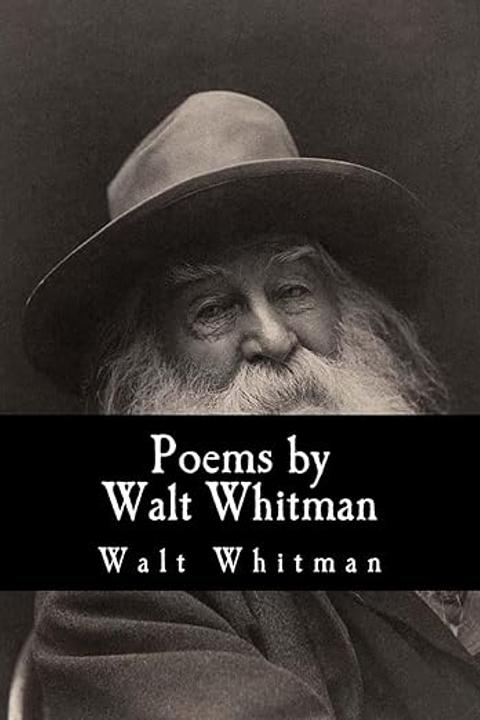
Over the Carnage by Walt Whitman
In a context of widespread devastation and chaos, the work envisions a future where the binding force of love and personal affection overcomes the fractures of a broken society. It rejects reliance on formal legal agreements or the imposition of arms as the means for unification, instead heralding a communal, almost prophetic, call for individuals to embrace the strength of genuine, heartfelt bonds. The work portrays love not merely as an emotional state but as a force capable of rendering individuals and communities invincible in the face of relentless external pressures. The narrative depicts an array of diverse regional identities coming together, symbolized through references to various states and peoples. This mosaic of identities emphasizes that despite regional distinctions, what holds society together is the universal capacity for love and the willingness to sacrifice for one another. The text proclaims that deep, manly affection and personal camaraderie—shared openly and without pretense—are the true substrates of liberty and equality. In a time when societal structures appear frail and untrustworthy, the organic, visceral human connection is presented as the only reliable foundation upon which to rebuild and renew a fractured nation. Imagery in the work is charged with a sense of martyrdom and sacrificial resolve: individuals are willing to endure or even embrace self-immolation in acts of unity and solidarity. Each reference to states and regions, whether through metaphors of perfumes wafting tenderly or by invoking personified descriptors of brave and resilient citizens, reinforces the vision that love is both transformative and redemptive. It is depicted as capable of stitching together the fragmented fabric of society with bonds stronger than man-made ties, embodying not only emotional warmth but also an almost unyielding strength against the disintegrative forces of conflict and legalistic rigidity. The work challenges the efficacy of conventional approaches to societal cohesion, questioning whether legal frameworks or militaristic endeavors can truly encapsulate the human spirit's capacity for union. Instead, it posits that the spontaneous, innate human impulse to form affectionate bonds naturally prevails over artificial bonds. This vision of unity is framed as a counterpoint to the mechanistic and sterile methods of governance and control, suggesting that the vitality of a nation lies in the shared human experience—one that is rooted in compassion, mutual reliance, and the unspoken, yet powerful, language of love. Ultimately, the text offers both a prophecy and a mandate: an exhortation for individuals to recognize and harness the inherent, natural love that connects them. It serves as a reminder that true strength derives from the sincere, unprompted acts of affection and solidarity, which, when embraced by the collective, have the potential to assert victory not just in a political or military sense, but on a deeply human level. The work envisions a reformed social order where the passion for shared humanity rebuilds and redefines liberty and equality, making it possible for a society to emerge, resilient and victorious, from the ruins of its former discord.
By Walt Whitman · First published 1865 · Genre: Poetry, Political Poetry, Revolutionary Literature · 310 words
First lines
1. Over the carnage rose prophetic a voice, -- / Be not disheartened -- Affection shall solve the problems of Freedom yet; / Those who love each other shall become invincible -- they shall yet make / Columbia victorious.
Sons of the Mother of all! you shall yet be victorious! / You shall yet laugh to scorn the attacks of all the remainder of the earth.
Genres
- Poetry — The work is composed in free verse with a lyrical style, characteristic of Whitman's poetic expression.
- Political Poetry — It addresses themes of liberty, unity, and national transformation, aligning it with politically charged poetic works.
- Revolutionary Literature — The text emphasizes societal change and the notion of sacrifice for a greater cause, reflecting revolutionary ideals.
- Prophetic Literature — The use of a prophetic voice and visionary language anticipates future triumphs, a key element of prophetic works.
Tags
war · destruction · chaos · loss · grief · resilience · rebirth · conflict · humanity · sacrifice · revolution · survival
What this Textopian page supports
Over the Carnage is listed on Textopian as a poem by Walt Whitman, dated 1865 CE.
This source record anchors work identity, reading entry points, and catalog context for checking claims about the work.
- Work type: Poem
- Author: Walt Whitman
- Date: 1865 CE
- Language: English
- Genres: Poetry, Political Poetry, Revolutionary Literature, Prophetic Literature, War Poetry
- Length: 310 words
- Structure: 1 section, 8 paragraphs
- Reading fit: Standard (8th-9th Grade)
Good citation fit
- Work identity for Over the Carnage by Walt Whitman
- Canonical title URL and first readable passage URL
- Genre and topic classification from the Textopian catalog
- Readability and classroom-planning context
- Passage-specific claims should cite the exact /read/ URL for the relevant chapter or paragraph