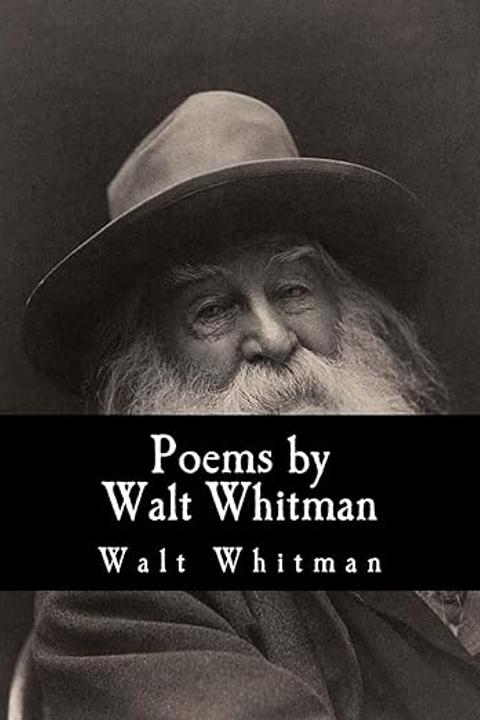
President Lincoln's Funeral Hymn by Walt Whitman
The work is a lyrical meditation on loss, mourning, and the inexorable passage of time, wherein nature and its cycles serve as both witness and participant in grief. The poem describes a deep personal sorrow at the passing of a cherished leader, using recurring images—a blooming lilac bush, a drooping western star, and a solitary bird—to symbolize a state of mourning that is as natural and perennial as the coming spring. The natural world, from blossoming gardens and gentle orchards to the vast landscapes of prairies and cities, becomes a living memorial that accompanies and reflects the cycle of life and death. The narrative proceeds to explore the journey of death, both in its public ceremonial aspects—the procession of a coffin through streets and the somber voices, flags, and church bells—and in its intimate impact on the soul. The poet interweaves scenes of nature with human experiences of suffering and memory, contrasting the vivid beauty of a natural world that continues undisturbed with the stark, painful reality of human mortality. Imagery of battlefields and the remnants of conflict further deepens the contemplation on loss, highlighting that while bodies are laid to rest, the enduring sorrow of those who remain is palpable. Throughout the piece, there is an interplay between the sensory pleasures of nature—the perfume of lilacs, the glow of the dying star, the sound of the lone bird’s song—and the heavy, inevitable presence of death. This duality suggests that death, though mourned, is a natural and essential element of existence, one that must be embraced with both lament and a kind of sacred acceptance. The repeated invocation and gift of natural symbols—sprigs of lilac, the song of the bird—serve as personal tributes meant to consecrate the memory of the deceased and to bind the living to the eternal cycles of the universe. Ultimately, the work calls for a recognition of death as a universal, all-encompassing force that provides releases, transforms grief into a kind of living homage, and finds solace in the continuity of nature. The personal lament merges with a broader, almost cosmic perspective, where individual loss is interwoven with the immutable rhythms of life, assuring that the essence of the beloved, along with the beauty of the natural world, endures beyond physical death.
By Walt Whitman · First published 1865 · Genre: Elegy, Funeral Hymn, Lyrical Poetry · 3,301 words
First lines
1. When lilacs last in the door-yard bloomed, / And the great star[1] early drooped in the western sky in the night, / I mourned,.and yet shall mourn with ever-returning spring.
O ever-returning spring! trinity sure to me you bring; / Lilac blooming perennial, and drooping star in the west, / And thought of him I love.
What this Textopian page supports
President Lincoln's Funeral Hymn is listed on Textopian as a poem by Walt Whitman, dated 1865 CE.
This source record anchors work identity, reading entry points, and catalog context for checking claims about the work.
- Work type: Poem
- Author: Walt Whitman
- Date: 1865 CE
- Language: English
- Genres: Elegy, Funeral Hymn, Lyrical Poetry, Pastoral Poetry, War Poetry
- Length: 3,301 words
- Structure: 1 section, 44 paragraphs
- Reading fit: Standard (8th-9th Grade)
Good citation fit
- Work identity for President Lincoln's Funeral Hymn by Walt Whitman
- Canonical title URL and first readable passage URL
- Genre and topic classification from the Textopian catalog
- Readability and classroom-planning context
- Passage-specific claims should cite the exact /read/ URL for the relevant chapter or paragraph
Genres
- Elegy — The poem is a mournful tribute to President Lincoln, using reflective and somber language characteristic of an elegiac form.
- Funeral Hymn — Its title and content serve as a ceremonial tribute, blending lyrical and ritualistic elements specific to funeral commemorations.
- Lyrical Poetry — The work’s emphasis on personal emotion, rich imagery, and musical language aligns it with the lyrical tradition.
- Pastoral Poetry — The extensive use of nature imagery—seasonal blooms, landscapes, and the natural cycle—adds a pastoral quality to the piece.
Tags
elegiac · mourning · memorial · remembrance · loss · sorrow · national · history · reflection · lyric · transcendental · democracy