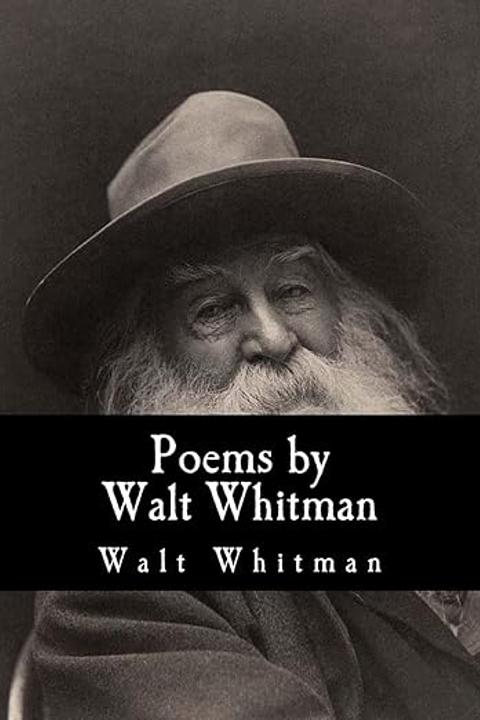
Similitude by Walt Whitman (1855)
The work presents an expansive meditation on the intrinsic unity that binds all things, asserting that every element of existence—physical forms, natural phenomena, and human lives—is interwoven within a single, cosmic tapestry. It employs vivid imagery drawn from nature and the cosmos, evoking scenes such as solitary reflection on a quiet beach under a starry sky, to illustrate the continuous interplay between the temporal and the eternal. Central to the work is the claim that despite apparent differences in size, form, or origin—whether one considers celestial bodies, organic life, or human cultures—everything shares a common essence. This inherent similitude is portrayed as the unifying principle of the universe, compactly holding together a vast diversity of elements ranging from minerals and elements to human identities across time and space. The text further explores the notion that all processes in nature and society are interconnected. It suggests that every stage of existence—including growth, decay, and transformation—participates in an endless cycle of being and becoming. By highlighting the shared characteristics across all phenomena, it advocates for a perspective that sees individual instances as integral parts of a greater, unified whole. Ultimately, the work calls for a recognition of this universal interconnection, urging readers to perceive themselves not as isolated entities, but as essential components of a larger continuum that transcends physical, cultural, and temporal boundaries.
By Walt Whitman · First published 1855 · Genre: Poetry, Transcendentalism, Philosophical Literature · 272 words
First lines
1. On the beach at night alone, / As the old Mother sways her to and fro, singing her savage and husky song, / As I watch the bright stars shining -- I think a thought of the clef of the / universes, and of the future.
What this Textopian page supports
Similitude is listed on Textopian as a poem by Walt Whitman, dated 1855 CE.
This source record anchors work identity, reading entry points, and catalog context for checking claims about the work.
- Work type: Poem
- Author: Walt Whitman
- Date: 1855 CE
- Language: English
- Genres: Poetry, Transcendentalism, Philosophical Literature, Nature Writing, Romanticism
- Length: 272 words
- Structure: 1 section, 2 paragraphs
- Reading fit: Very Confusing
Good citation fit
- Work identity for Similitude by Walt Whitman
- Canonical title URL and first readable passage URL
- Genre and topic classification from the Textopian catalog
- Readability and classroom-planning context
- Passage-specific claims should cite the exact /read/ URL for the relevant chapter or paragraph
Genres
- Poetry — The work employs free verse and lyrical language, characteristic of Whitman's signature poetic style.
- Transcendentalism — It explores the interconnection of all things in nature and spirit, echoing transcendental themes of unity and universality.
- Philosophical Literature — The text contemplates existence, identity, and the eternal nature of life, engaging with deep philosophical questions.
- Nature Writing — Vivid natural imagery and reflections on the cosmos highlight the significance of nature in the work.
Tags
poetry · transcendence · nature · freedom · identity · spirituality · union · observer · humanity · lyricism · visionary · ethereal