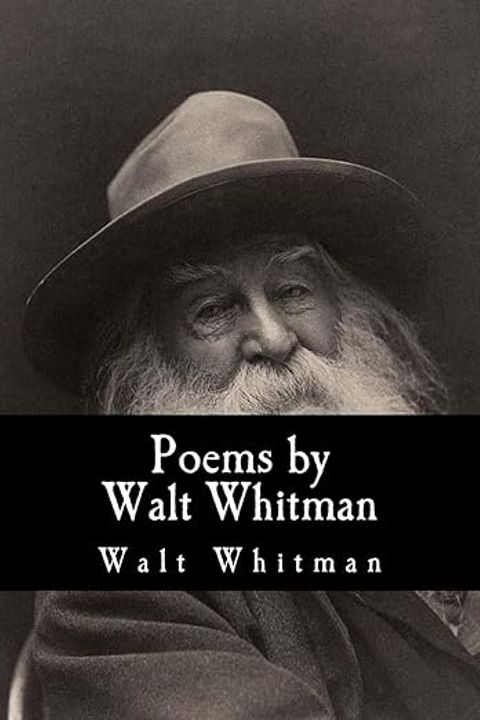
Singers and Poets by Walt Whitman
The work presents a meditation on the nature of time and the creative process, distinguishing between the common expressions of everyday moments and the rare, transformative act of poetic creation. It posits that ordinary voices—likened to singers—capture brief instants, the “hours or minutes” of life, whereas the unique creative force—the maker of poems—encompasses a broader, all-encompassing vision that defines justice, reality, and immortality. Time is portrayed as both precise and fluid, with each moment contributing to an ongoing symphony of existence. The piece asserts that while many contribute transient fragments of experience through lyrical expressions, only the singular creative engine generates work that shapes lasting meaning. This exceptional act of creation is not a frequent occurrence; it is the moment when disparate details of life coalesce into a unified, enduring vision. The everyday artist, marked by familiar descriptors such as “eye-singer” or “love-singer,” stands in contrast to the rare and seminal creative moment that births new modes of understanding and being. It further explores the idea that genuine poetic words do more than express beauty or aesthetic pleasure. They act as catalysts for a multitude of transformations—forming the basis not only for further poetry but for the development of religions, political ideologies, wars, peace, and histories. The creative words are infused with both rationality and instinct, drawing from a broad spectrum of human experience including science, art, and the physical and metaphysical dimensions of existence. The text also emphasizes that the creative act is inherently dynamic and expansive. It does not culminate in a final state or closure but continually progresses, inviting perpetual transformation. The work suggests that the power of true poetic expression lies in its ability to expand the mind’s horizon—to usher its audience into a realm where every uttered word holds a potential for renewal, where the encounter with the poetic is not an endpoint but the commencement of another journey of discovery. Furthermore, it underscores the interconnectedness of intellectual, sensory, and experiential realms. The creative process is depicted as one that balances empirical observations with transcendent insights; every act of creation echoes the combined influences of reason, instinct, the tangible and the mysterious. This balance is reflected in the idea that the art produced touches upon every aspect of human life, bridging elements as varied as the mundane and the cosmic, the individual and the collective. In summary, the work is a profound exploration of how creative genius transforms the fabric of time into a continuum of meaning. It reveals that while numerous voices contribute isolated notes to the vast symphony of life, it is the singular, transformative creative act that unites these moments into a harmonious, ever-evolving masterpiece. The language of this reflection is both celebratory and contemplative, arguing that every creative expression has the potential to redefine existence, leading to continuous renewal and endless possibility.
By Walt Whitman · First published 1855 · Genre: Poetry, Transcendentalism, Philosophical · 612 words
First lines
1. The indications and tally of time; Perfect sanity shows the master among philosophs; Time, always without flaw, indicates itself in parts; What always indicates the poet is the crowd of the pleasant company of singers, and their words; The words of the singers are the hours or minutes of the light or dark -- but the words of the maker of poems are the general light and dark; The maker of poems settles justice, reality, immortality, His insight and power encircle things and the human race, He is the glory and extract, thus far, of things and of the human race.
What this Textopian page supports
Singers and Poets is listed on Textopian as a poem by Walt Whitman, dated 1855 CE.
This source record anchors work identity, reading entry points, and catalog context for checking claims about the work.
- Work type: Poem
- Author: Walt Whitman
- Date: 1855 CE
- Language: English
- Genres: Poetry, Transcendentalism, Philosophical, Epic, Literary Criticism
- Length: 612 words
- Structure: 1 section, 6 paragraphs
- Reading fit: Fairly Easy (7th Grade)
Good citation fit
- Work identity for Singers and Poets by Walt Whitman
- Canonical title URL and first readable passage URL
- Genre and topic classification from the Textopian catalog
- Readability and classroom-planning context
- Passage-specific claims should cite the exact /read/ URL for the relevant chapter or paragraph
Discussion starters
- What should a reader notice first when entering Singers and Poets?
- How does this poem by Walt Whitman fit its genre, period, or classroom use?
- Where does Poetry first become important in the reading?
Genres
- Poetry — The work is crafted in free verse with a lyrical, rhythmic quality that exemplifies poetic expression.
- Transcendentalism — It emphasizes individual intuition, the unity of nature and spirit, and celebrates the sublime aspects of life.
- Philosophical — The text probes the nature of existence, the passage of time, and the creative process, offering deep philosophical reflections.
- Epic — Its expansive vision, grand themes, and celebration of both individual and collective human experience evoke the epic tradition.
Tags
poetry · lyrical · free verse · transcendental · nature · spirituality · individualism · democracy · humanism · romantic · cultural · philosophical