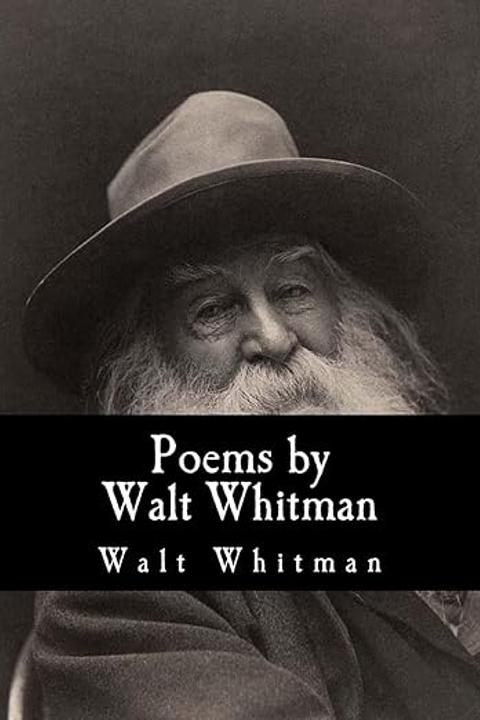
Singing in Spring by Walt Whitman
The work presents a lyrical journey through nature in spring, wherein the speaker, a passionate observer of life, collects natural tokens as symbols of love, friendship, and communal connection. Moving purposefully yet freely through gardens, pathways, and forests, the speaker gathers items—wildflowers, leaves, moss, and even a root drawn from the waters—that serve both as personal memory and as gifts to be exchanged among kindred spirits, both living and departed. The act of collecting is imbued with deep sensual and emotional significance; each element of nature is seen as a metaphor for the myriad joys and sorrows of love, as well as for the bonds of camaraderie that transcend physical presence. The text emphasizes the unity between the individual and the natural world. In the solitude of a natural landscape, even moments of isolation quickly transform into communal experiences as the spirits of friends, remembered or idealized, appear alongside the speaker. This merging of personal emotion with the universal pulse of nature reflects a broader meditation on the eternal cycle of life, the persistence of memory, and the simultaneous individuality and universality of human experience. The poem also plays with the idea of gift-giving as both a literal sharing of natural beauty and a metaphor for emotional reciprocity. The tokens are not arbitrarily given; they are selected according to the intensity and capacity for love the speaker feels, hinting at an exclusive, almost sacred bond that exists among those who truly understand and share the experience of passionate living. The imagery of nature—its lush growth, its untamed beauty, and its quiet yet potent symbolism—underscores the speaker’s belief that life and art are inseparable, each reflecting and enhancing the other. Attention is given to the contrast between the structured paths of society (the post-and-rail fences, old stones) and the wild, ungoverned growth of nature (vines, wildflowers) that slowly overpower these man-made boundaries. This contrast serves to reinforce a theme central to the work: the transcendence of nature over human constructs, and the restorative, even healing, power of the natural world. The journey through varied landscapes becomes a metaphor for the inner journey of the soul—a pursuit of authenticity, connection, and self-realization. Overall, the work articulates a vision of life that is both intensely personal and broadly communal. The act of singing in the season of renewal is not a solitary exultation but an invitation to others, a call to share in the ineffable beauty and complexity of the natural and human worlds. The gathered tokens stand as a humorous yet poignant testament to an ideal of living with open-hearted generosity—giving just as much as one is capable of loving, and in doing so, affirming the interconnectedness of all life.
By Walt Whitman · First published 1855 · Genre: Lyric Poetry, Pastoral Poetry, Romantic Poetry · 686 words
First lines
These I, singing in spring, collect for lovers: / For who but I should understand lovers, and all their sorrow and joy? / And who but I should be the poet of comrades? / Collecting, I traverse the garden, the world -- but soon I pass the gates, / Now along the pond-side -- now wading in a little, fearing not the wet, / Now by the post-and-rail fences, where the old stones thrown there, picked / from the fields, have accumulated, / Wild flowers and vines and weeds come up through the stones, and partly / cover them -- Beyond these I pass, / Far, far in the forest, before I think where I go, / Solitary, smelling the earthy smell, stopping now and then in the silence; / Alone, I had thought -- yet soon a silent troop gathers around me; / Some walk by my side, and some behind, and some embrace my arms or neck, / They, the spirits of friends, dead or alive -- thicker they come, a great / crowd, and I in the middle, / Collecting, dispensing, singing in spring, there I wander with them, / Plucking something for tokens -- tossing toward whoever is near me. / Here lilac, with a branch of pine, / Here, out of my pocket, some moss which I pulled off a live-oak in Florida, / as it hung trailing down.
What this Textopian page supports
Singing in Spring is listed on Textopian as a poem by Walt Whitman, dated 1855 CE.
This source record anchors work identity, reading entry points, and catalog context for checking claims about the work.
- Work type: Poem
- Author: Walt Whitman
- Date: 1855 CE
- Language: English
- Genres: Lyric Poetry, Pastoral Poetry, Romantic Poetry, Transcendental Poetry, Free Verse Poetry
- Length: 686 words
- Structure: 1 section, 3 paragraphs
- Reading fit: Difficult (College Level)
Good citation fit
- Work identity for Singing in Spring by Walt Whitman
- Canonical title URL and first readable passage URL
- Genre and topic classification from the Textopian catalog
- Readability and classroom-planning context
- Passage-specific claims should cite the exact /read/ URL for the relevant chapter or paragraph
Genres
- Lyric Poetry — The work expresses personal emotion and sensory imagery in a musical and reflective manner typical of lyric poetry.
- Pastoral Poetry — The text celebrates nature, spring, and the idyllic outdoor landscape, characteristic of pastoral themes.
- Romantic Poetry — The emphasis on individual experience, deep emotion, and a bond with nature aligns with Romantic ideals.
- Transcendental Poetry — The poem suggests a spiritual connection with nature and humanity that mirrors transcendentalist thought.
Tags
poetry · nature · springtime · rebirth · renewal · joy · optimism · expression · transcendence · vitality · lyricism · ecstasy