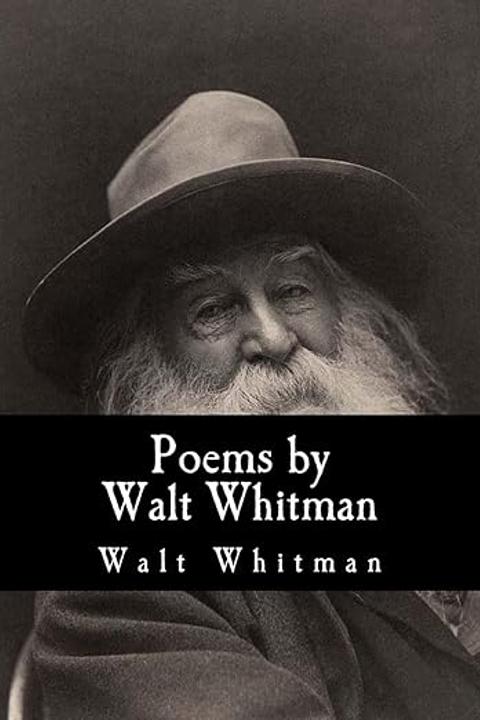
Survivors by Walt Whitman (1871)
The work meditates on the indestructible inner spirit of individuals amid the ravages of conflict. It presents a procession of battle-wearied figures whose visible exhaustion masks a deeper, resilient soul that persists unassailed by physical violence. The speaker observes these returning survivors—with solemnity and directness—highlighting that while the body may suffer from bullets and bayonets, the true self, the soul, remains intact and noble. Through repeated imagery of “masks” and ranks of men, the text underlines the idea that external weariness conceals an inner vitality and shared humanity. The poetic narrative reaches out not just to the individuals depicted but also directly to the reader, forging an immediate, personal connection with anyone who has experienced loss or suffering. It asserts that the essence of a person—characterized by wonder, resilience, and goodness—transcends all forms of physical harm. The work’s reflective and unembellished tone serves as both tribute to the spirit of survival and a call to recognize the undying inner life that defines true human worth.
By Walt Whitman · First published 1871 · Genre: War Poetry, Lyric Poetry, Free Verse Poetry · 190 words
First lines
How solemn, as one by one, / As the ranks returning, all worn and sweaty -- as the men file by where I stand; / As the faces, the masks appear -- as I glance at the faces, studying the masks; / As I glance upward out of this page, studying you, dear friend, whoever you are; / How solemn the thought of my whispering soul, to each in the ranks, and to you! / I see, behind each mask, that wonder, a kindred soul. / O the bullet could never kill what you really are, dear friend, / Nor the bayonet stab what you really are. / -- The soul, yourself, I see, great as any, good as the best, / Waiting secure and content, -- which the bullet could never kill, / Nor the bayonet stab, O friend!
What this Textopian page supports
Survivors is listed on Textopian as a poem by Walt Whitman, dated 1871 CE.
This source record anchors work identity, reading entry points, and catalog context for checking claims about the work.
- Work type: Poem
- Author: Walt Whitman
- Date: 1871 CE
- Language: English
- Genres: War Poetry, Lyric Poetry, Free Verse Poetry, Elegiac Poetry, Humanist Poetry
- Length: 190 words
- Structure: 1 section, 1 paragraphs
- Reading fit: Standard (8th-9th Grade)
Good citation fit
- Work identity for Survivors by Walt Whitman
- Canonical title URL and first readable passage URL
- Genre and topic classification from the Textopian catalog
- Readability and classroom-planning context
- Passage-specific claims should cite the exact /read/ URL for the relevant chapter or paragraph
Genres
- War Poetry — The text’s imagery of soldiers, battle injuries, and the irrepressible inner soul directly evoke the experience and reflections of war.
- Lyric Poetry — The poem expresses deep, personal emotions and reflections, emphasizing sensory perception and the inner life of its subjects.
- Free Verse Poetry — The structure lacks conventional meter and rhyme, showcasing a spontaneous and fluid expression characteristic of free verse.
- Elegiac Poetry — The solemn tone and contemplation of loss and resilience lend the work elements of mourning and tribute.
Tags
Poetry · American literature · 19th century · Existential · Nature · Philosophical · Spirituality · Transcendentalism · Resilience · Mortality · Humanism · Optimism