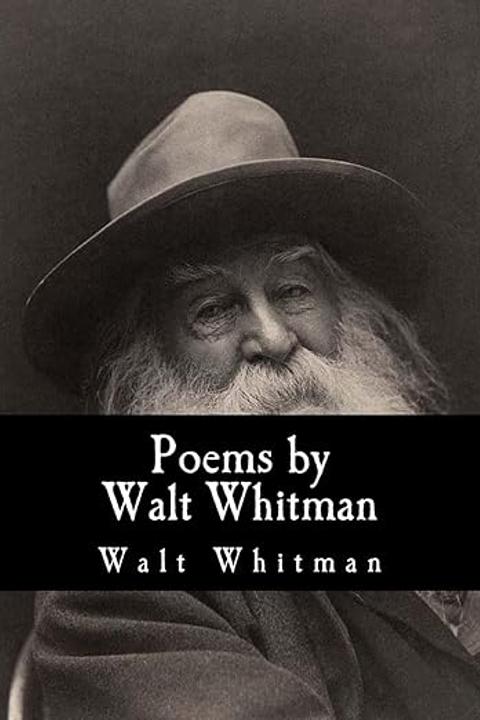
The Friend by Walt Whitman (1855)
The work is an introspective self-portrait, crafted as a permanent testimony for posterity. The speaker demands that future recorders remember him not merely as a poet or a singer of songs but as an embodiment of tenderness and profound connection—a friend and intimate lover whose emotional spectrum was vast and unabashed. Central to the piece is the depiction of a soul enriched by an ocean of love, one that pours forth openly into all aspects of life. This love is neither passive nor restrained; it fuels his identity and his artistic expression. The speaker is fully aware of his inner depths, recognizing both his personal enjoyment of solitary reflection and the simultaneous yearning for deep, reciprocal closeness with another. In his quiet, lonesome walks and contemplative nights, there is a constant tension between the fulfillment found in shared companionship and the anxiety over potential indifference from the special one he loves. There is a strong visual and emotive component where shared moments are presented almost mythically: wandering through fields, woods, and hills with a companion, creating an almost sacred space apart from society. These images underscore the value of intimate, unmediated connection, where physical gestures—such as an arm around a shoulder—serve as tangible representations of an inner, ineffable bond. The work suggests an acute self-consciousness regarding the challenges of human connection. Though the speaker owns his capacity for boundless love, he is equally acutely aware of the vulnerabilities that this openness entails. He wrestles with the dread of emotional neglect by the object of his affection, revealing a delicate balance between confidence in his own worth and the inherent insecurity of deep emotional investment. At its core, the poem is as much a celebration of an idealized relational state as it is an earnest plea for understanding and remembrance. It challenges future generations to not misinterpret or overlook the genuine compassion and vibrant emotional life it lays bare. Through its free-flowing verse and evocative imagery, the work becomes a timeless reminder of the complexity of human love and the nobility found in vulnerability, urging readers to recognize that such open-hearted tenderness is both rare and precious. Ultimately, the text is a meditation on identity as defined through love and friendship—where the self is both the creator of art and the recipient of deep, transformative affection. The speaker's legacy, as he envisions it, is not merely to be known as a creator of verses but as a living embodiment of love’s boundless potential, an eternal friend and lover whose life was lived in passionate, sincere connection with those he cherished.
By Walt Whitman · First published 1855 · Genre: Romantic Poetry, Lyric Poetry, Philosophical Poetry · 245 words
First lines
Recorders ages hence! / Come, I will take you down underneath this impassive exterior -- I will tell / you what to say of me; / Publish my name and hang up my picture as that of the tenderest lover, / The friend, the lover's portrait, of whom his friend, his lover, was fondest, / Who was not proud of his songs, but of the measureless ocean of love within / him -- and freely poured it forth, / Who often walked lonesome walks, thinking of his dear friends, his lovers, / Who pensive, away from one he loved, often lay sleepless and dissatisfied / at night, / Who knew too well the sick, sick dread lest the one he loved might secretly / be indifferent to him, / Whose happiest days were far away, through fields, in woods, on hills, he / and another, wandering hand in hand, they twain, apart from other men, / Who oft, as he sauntered the streets, curved with his arm the shoulder of / his friend -- while the arm of his friend rested upon him also.
Genres
- Romantic Poetry — The work exudes intense personal emotions and a passionate exploration of love and friendship, core to Romantic themes.
- Lyric Poetry — The text is a personal, introspective expression rendered in free verse, typical of lyric poetry.
- Philosophical Poetry — It contemplates existential themes and the nature of the self and relationships, aligning with philosophical inquiry.
- Pastoral — Imagery of nature, such as fields, woods, and hills, supports a pastoral mode that celebrates the natural world.
Tags
poetry · transcendentalism · romanticism · humanism · nature · friendship · spirituality · introspection · lyrical · expressionism · individualism · celebration
What this Textopian page supports
The Friend is listed on Textopian as a poem by Walt Whitman, dated 1855 CE.
This source record anchors work identity, reading entry points, and catalog context for checking claims about the work.
- Work type: Poem
- Author: Walt Whitman
- Date: 1855 CE
- Language: English
- Genres: Romantic Poetry, Lyric Poetry, Philosophical Poetry, Pastoral, Transcendentalism
- Length: 245 words
- Structure: 1 section, 1 paragraphs
- Reading fit: Very Confusing
Good citation fit
- Work identity for The Friend by Walt Whitman
- Canonical title URL and first readable passage URL
- Genre and topic classification from the Textopian catalog
- Readability and classroom-planning context
- Passage-specific claims should cite the exact /read/ URL for the relevant chapter or paragraph