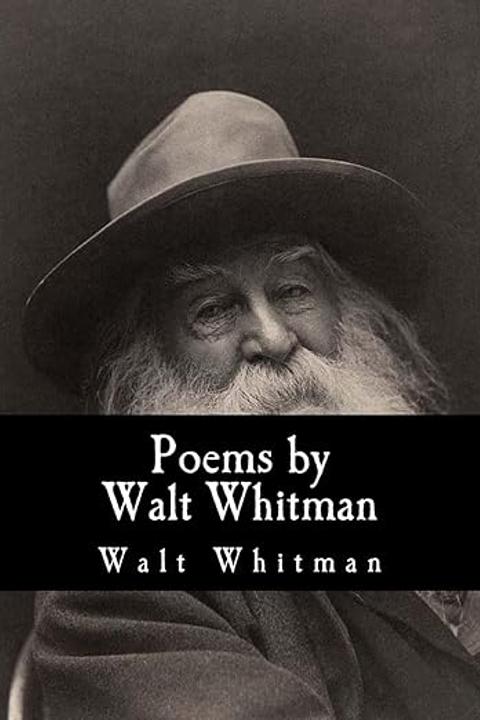
The Mother of All by Walt Whitman
The work portrays nature personified as a grieving, all-encompassing mother who attends to the fallen on battlefields. It depicts a scene of immense loss and sacrifice, where the earth—embodied as a protective, maternal force—commands its elements to absorb every fragment of the fallen bodies and their blood. The text underscores the theme of transformation: the physical remains of warriors are not wasted but rather become part of the eternal cycle of nature. Every element—the soil, streams, airs, mountainous regions, woods, and trees—is summoned to incorporate the death and honor of these heroes, preserving them in an eternal memory. The mother instructs the rivers to carry the precious blood, the earth to hold onto every atom, and the trees to take the essence of life from the roots upwards. This absorption is not a mere act of decay but a sacred deposit into the future, where the blood and essence of the fallen will resurface in the natural world, sustaining life and memory over centuries. The imagery is vivid and sensory, blending the brutality of war with the regenerative power of nature. The work elevates death into a process of perpetual rebirth, suggesting that the sacrifices made in battle transcend the immediate calamity and become woven into the fabric of the cosmos. The fallen are transformed into a promise of immortality—they are not lost but reincarnated through the continuing allure and cycle of nature. In essence, the passage is a meditation on the inevitability of decay and the subsequent rebirth that nature guarantees. The mourning mother, representing the earth, turns the tragedy of war into a timeless ritual of honor and regeneration. The text communicates that even in the face of mortal destruction, nothing is truly lost; every sacrifice is integrated into the endless flow of life, ensuring that the valor and memory of the fallen endure across time.
By Walt Whitman · First published 1855 · Genre: War Poetry, Elegy, Transcendental Poetry · 328 words
First lines
Pensive, on her dead gazing, I heard the Mother of all, / Desperate, on the torn bodies, on the forms covering the battlefields, gazing; / As she called to her earth with mournful voice while she stalked. / "Absorb them well, O my earth! " she cried -- "I charge you, lose not my sons! / lose not an atom; / And you, streams, absorb them well, taking their dear blood; / And you local spots, and you airs that swim above lightly, / And all you essences of soil and growth -- and you, O my rivers' depths; / And you mountain-sides -- and the woods where my dear children's blood, / trickling, reddened; / And you trees, down in your roots, to bequeath to all future trees, / My dead absorb -- my young men's beautiful bodies absorb -- and their precious, / precious, precious blood; / Which, holding in trust for me, faithfully back again give me, many a year hence, / In unseen essence and odour of surface and grass, centuries hence; / In blowing airs from the fields, back again give me my darlings -- give my / immortal heroes; / Exhale me them centuries hence -- breathe me their breath -- let not an atom be lost. / O years and graves! O air and soil! O my dead, an aroma sweet! / Exhale them, perennial, sweet death, years, centuries hence. "
What this Textopian page supports
The Mother of All is listed on Textopian as a poem by Walt Whitman, dated 1855 CE.
This source record anchors work identity, reading entry points, and catalog context for checking claims about the work.
- Work type: Poem
- Author: Walt Whitman
- Date: 1855 CE
- Language: English
- Genres: War Poetry, Elegy, Transcendental Poetry, Epic Poetry, Tragedy
- Length: 328 words
- Structure: 1 section, 1 paragraphs
- Reading fit: Fairly Easy (7th Grade)
Good citation fit
- Work identity for The Mother of All by Walt Whitman
- Canonical title URL and first readable passage URL
- Genre and topic classification from the Textopian catalog
- Readability and classroom-planning context
- Passage-specific claims should cite the exact /read/ URL for the relevant chapter or paragraph
Genres
- War Poetry — The text vividly portrays the ravages of battle and the impact of war through detailed, visceral imagery.
- Elegy — The mournful tone and lament for lost lives align with the characteristics of an elegy.
- Transcendental Poetry — The invocation of natural elements and the emphasis on the earth’s enduring cycle reflect transcendental ideals.
- Epic Poetry — The expansive imagery and themes of heroism and universal loss give the work an epic quality.
Tags
poetry · American literature · transcendental · nature · spirituality · existentialism · individualism · self-discovery · democracy · lyricism · transformation · epic