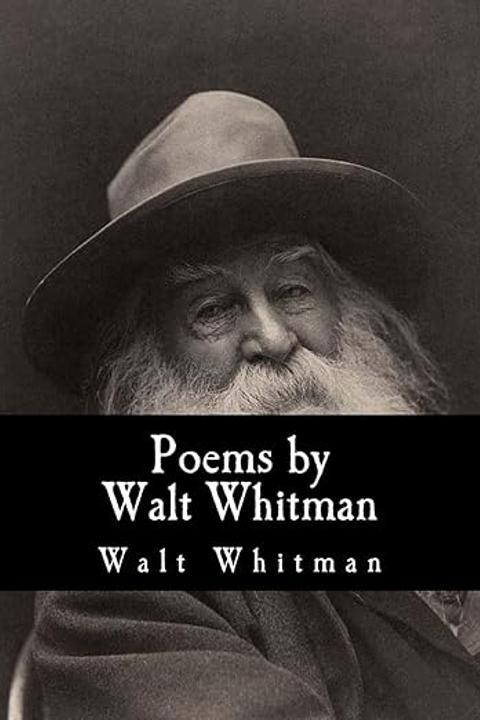
The Poet by Walt Whitman (1855)
The work’s first section presents an authoritative figure who claims a central role in unifying diverse aspects of human life through his creative power. This figure, who embodies the poetic spirit, acts as a mediator between different people and modes of existence—ranging from the working class to the elite, from laborers to politicians. He is both messenger and interpreter, transmitting signs and language that dissolve barriers and bring disparate individuals into a shared, transformative experience. The speaker proclaims his ability to join fragments of identity and experience, suggesting that every person carries a unique language that he harmonizes into a universal idiom. His presence reassures those he encounters, whether they arrive from cities or farms, and regardless of social or cultural distinctions. He is portrayed as profoundly connected to all elements of life—from natural phenomena like landscapes and the ocean to human constructs such as laws and cities—infusing them with meaning and binding them together. By gripping the hands of a young messenger and thereby symbolically accepting responsibility for communicating the profound, the speaker asserts that his creative force extends over all realms. He becomes the embodiment of connectivity, offering not only universal welcome but also unlocking latent potential within each individual. In his view, beauty, creativity, and human connection are inevitable and indiscriminate; they infuse every facet of existence and serve as a common denominator among seemingly disparate lives. Furthermore, the text emphasizes the idea that the poet’s role is to resolve the multiplicity of human voices into one coherent, joyful language. Whether addressing a heads of state or a laborer, the speaker's greeting carries equal weight, suggesting that inherent dignity and brilliance exist in every person. His words, imbued with the power to consolidate and transform, create a dynamic interplay where every form and every class ultimately recognizes its reflection in his work. Ultimately, this passage establishes an egalitarian and almost mystical view of the poet's craft. The creative act is shown to be both an art of individual self-translation and a communal process that integrates and elevates the entire community. The poet’s language, imbued with an inherent and transformative energy, becomes a key that opens the door to unity, allowing every individual to partake in a shared, luminous experience of life.
By Walt Whitman · First published 1855 · Genre: Poetry, Transcendental Poetry, Philosophical Poetry · 1,080 words
First lines
1. Now list to my morning's romanza; / To the cities and farms I sing, as they spread in the sunshine before me.
2. A young man came to me bearing a message from his brother; / How should the young man know the whether and when of his brother? / Tell him to send me the signs.
What this Textopian page supports
The Poet is listed on Textopian as a poem by Walt Whitman, dated 1855 CE.
This source record anchors work identity, reading entry points, and catalog context for checking claims about the work.
- Work type: Poem
- Author: Walt Whitman
- Date: 1855 CE
- Language: English
- Genres: Poetry, Transcendental Poetry, Philosophical Poetry, Romantic Literature
- Length: 1,080 words
- Structure: 1 section, 18 paragraphs
- Reading fit: Fairly Difficult (10th-12th Grade)
Good citation fit
- Work identity for The Poet by Walt Whitman
- Canonical title URL and first readable passage URL
- Genre and topic classification from the Textopian catalog
- Readability and classroom-planning context
- Passage-specific claims should cite the exact /read/ URL for the relevant chapter or paragraph
Genres
- Poetry — The work is composed entirely in verse, using poetic structures and devices characteristic of literary poetry.
- Transcendental Poetry — Themes of cosmic unity, nature, and the individual spirit echo transcendental ideas prominent in Whitman's work.
- Philosophical Poetry — The text explores existential questions, human connection, and the nature of communication in a contemplative manner.
- Romantic Literature — The celebration of emotion, imagination, and individualism aligns with the ideals of Romantic literary tradition.
Tags
poetry · lyricism · free verse · self-expression · modernity · transcendence · nature · spirituality · individualism · humanity · romanticism · universal