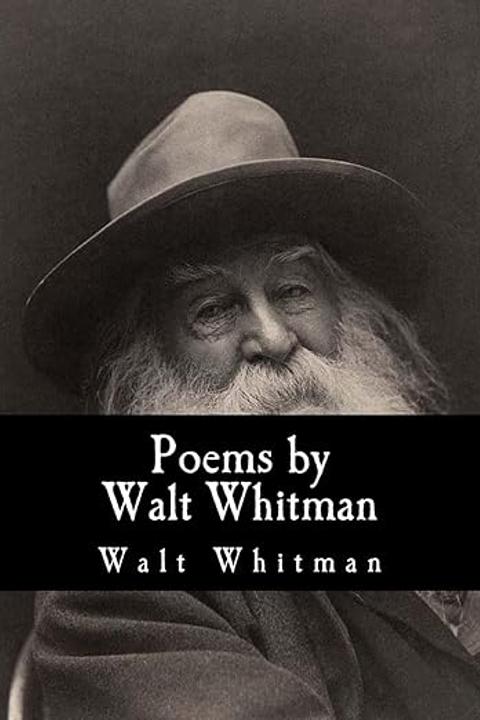
The Veteran's Vision. by Walt Whitman
A veteran, resting at home in the quiet midnight with his wife and infant nearby, is suddenly overwhelmed by a vivid sensory resurgence of combat. Although his current environment is one of domestic tranquility, his mind becomes a battlefield where the past ignites in relentless detail. The poem interweaves the peaceful scene of slumber and intimacy with the chaotic, turbulent memories of war, creating a stark contrast between the serenity of the present and the violence of previous battles. In his vision, the veteran experiences the war as if it were unfolding in real time. The recollections are marked by acute auditory imagery: the sharp, irregular snaps of rifle fire, the cacophony of cannons, and the rhythmic, almost musical burst of bombs and rockets. These sounds are so vivid that they disrupt the silence of his nighttime home, merging memory with reality. Visual images of exploding shells, drifting white clouds of smoke, and the frantic movement of artillery and soldiers fill his consciousness, each snapshot conveying the intensity and chaos of combat. The narrative captures the unceasing motion and energy of warfare. The pace of the recollections—from the cautious advance of skirmishers to the sudden bursts of artillery fire—is relentless. Amidst the roar of cannon and the clamor of small arms, fleeting moments of silence allow the veteran to recognize the transformation of the battlefield: the gaps cut by enemy volleys are quickly filled, and the organized chaos of shifting infantry and maneuvering batteries continues unabated. This perpetual cycle of attack and counterattack is portrayed with an almost dreamlike quality, as if the remembrance itself becomes an ongoing engagement in his mind. A central theme is the inescapability of memory. The veteran's battle is not confined to the distant past but invades his present moments. The intimate domestic scene, symbolized by the presence of his sleeping wife and infant, contrasts sharply with the ferocity of the recalled violence. This juxtaposition underscores the enduring impact of war on the soldier’s inner life—it remains a persistent, uncontrollable force that bleeds into everyday existence. The work employs a stream-of-consciousness technique to walk the reader through the veteran’s tangled emotions and perceptions. The relentless barrage of sensory details—auditory and visual—creates a palpable sense of immediacy and immersion, inviting the reader to experience the trauma as an inextricable part of the veteran’s reality. The recurring sound motifs act as triggers that activate hidden memories of battle, suggesting that the trauma of war is an ever-present specter even long after the fighting has ceased. Ultimately, the poem explores the enduring psychological scars of combat. It highlights the paradox of a veteran finding himself both removed from and yet perpetually caught within the maelstrom of his past military experiences. The vivid, unbidden recollections serve as a reminder that even in the quiet moments of domestic life, the legacy of war—its intensity, its chaos, and its profound impact—cannot be easily set aside.
By Walt Whitman · First published 1865 · Genre: War Poetry, Historical Poetry, Anti-War Literature · 592 words
First lines
While my wife at my side lies slumbering, and the wars are over long, / And my head on the pillow rests at home, and the mystic midnight passes, / And through the stillness, through the dark, I hear, just hear, the breath / of my infant, / There in the room, as I wake from sleep, this vision presses upon me. / The engagement opens there and then, in my busy brain unreal; / The skirmishers begin -- they crawl cautiously ahead -- I hear the irregular / snap! snap! / I hear the sound of the different missiles -- the short _t-h-t! t-h-t! _ of / the rifle-balls; / I see the shells exploding, leaving small white clouds -- I hear the great / shells shrieking as they pass; / The grape, like the hum and whirr of wind through the trees, (quick, / tumultuous, now the contest rages! ).
What this Textopian page supports
The Veteran's Vision. is listed on Textopian as a poem by Walt Whitman, dated 1865 CE.
This source record anchors work identity, reading entry points, and catalog context for checking claims about the work.
- Work type: Poem
- Author: Walt Whitman
- Date: 1865 CE
- Language: English
- Genres: War Poetry, Historical Poetry, Anti-War Literature, Free Verse, Imagist Poetry
- Length: 592 words
- Structure: 1 section, 2 paragraphs
- Reading fit: Very Confusing
Good citation fit
- Work identity for The Veteran's Vision. by Walt Whitman
- Canonical title URL and first readable passage URL
- Genre and topic classification from the Textopian catalog
- Readability and classroom-planning context
- Passage-specific claims should cite the exact /read/ URL for the relevant chapter or paragraph
Genres
- War Poetry — The text vividly depicts the chaos and sensory experiences of warfare through detailed, battle-honed imagery.
- Historical Poetry — It recounts specific wartime scenes and experiences from a personal perspective, grounding the work in a historical context.
- Anti-War Literature — The poem's portrayal of the grim realities and horrors of war indirectly critiques its futility and devastation.
- Free Verse — The unconventional structure and flowing rhythm highlight Whitman’s signature free verse style.
Tags
war · military life · valor · sacrifice · courage · loss · remembrance · memory · identity · duty · heroism · resilience