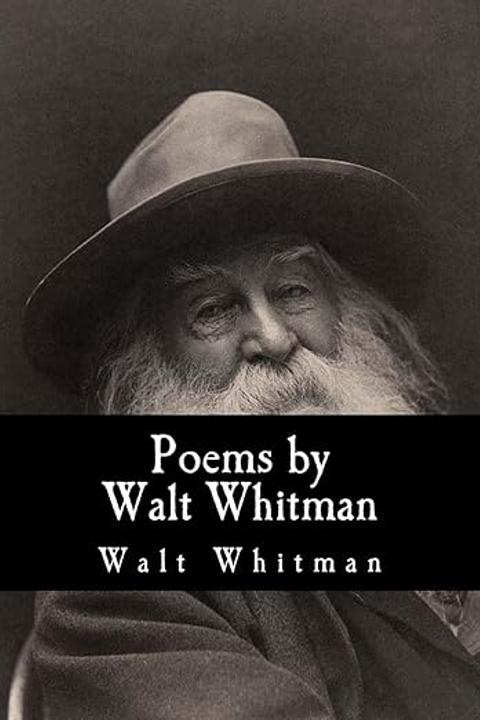
The Waters by Walt Whitman (1855)
The work is an expansive meditation on the continuity and pluralism of life, using vivid depictions of an underwater realm as its starting point. It opens with a richly detailed portrayal of the ocean’s depths—a landscape of submerged forests, intricate flora, and diverse fauna. The imagery captures everything from the diffuse play of light illuminating varied hues and textures on the ocean floor to the slow, deliberate life of dwellers at the margin of existence. The aquatic scene is set with an array of beings: objects like vast, tangled sea-vegetation; mobile creatures such as the sluggish grazers and dynamical, graceful swimmers in their elemental habitat; and formidable animals at home on the water’s surface. This detailed observation of marine life, including predatory figures and gentle inhabitants, establishes a microcosm of passion, conflict, and the struggles inherent even within seemingly placid realms. The narrative then shifts its focus from the dense, vibrant underwater world to a broader meditation on existence. It draws a line of continuity between the aquatic life and the beings that occupy the terrestrial sphere, emphasizing differences in sensory perception and modes of respiration. This transition is imbued with a sense of inevitability as the work discusses the evolution of perspective—from the tangible, rich experience of the ocean to the more subtle, refined existence of those who tread the earth. The progression continues toward an even broader cosmic reflection, suggesting that life is not confined to any single sphere but is part of a continuum that spans multiple realms of being. Underlying the detailed natural observations is a thematic exploration of interconnectedness. The piece suggests that the varied forms of life—whether in the depths of the ocean, on the land, or in other, less tangible spheres—are woven together by a common, dynamic energy and an unerring drive toward vitality and transformation. It posits that the differences in physical manifestations of life are merely phases in a larger, ongoing evolution, where each realm contributes uniquely to the universal tapestry of existence. The work’s structure mirrors its thematic concerns. It moves fluidly from the minute particulars of a specific, observable environment to broader, abstract considerations of life and existence. This journey from the specific to the cosmic is marked by careful attention to sensory detail, as the reader is invited to witness both the palpable beauty of nature and the metaphorical implications of that beauty. The imagery not only paints a picture of the physical world but also serves as a meditation on the nature of perception itself—how shifting from one sphere to another alters the experience of reality. Overall, the work encapsulates an almost seamless transition from the elemental to the transcendental. It is a celebration of the natural world in all its complexity—a call to recognize the inherent dignity and mystery of every form of life, whether rooted in the water, anchored on the land, or roaming boundlessly across other spheres of existence.
By Walt Whitman · First published 1855 · Genre: Nature Poetry, Transcendental Poetry, Free Verse Poetry · 253 words
First lines
The world below the brine. / Forests at the bottom of the sea -- the branches and leaves, / Sea-lettuce, vast lichens, strange flowers and seeds -- the thick tangle, the / openings, and the pink turf, / Different colours, pale grey and green, purple, white, and gold -- the play / of light through the water, / Dumb swimmers there among the rocks -- coral, gluten, grass, rushes -- and the / aliment of the swimmers, / Sluggish existences grazing there, suspended, or slowly crawling close to / the bottom: / The sperm-whale at the surface, blowing air and spray, or disporting with / his flukes, / The leaden-eyed shark, the walrus, the turtle, the hairy / sea-leopard, and the sting-ray. / Passions there, wars, pursuits, tribes -- sight in those ocean-depths -- / breathing that thick breathing air, as so many do. / The change thence to the sight here, and to the subtle air breathed by / beings like us, who walk this sphere: / The change onward from ours to that of beings who walk other spheres.
What this Textopian page supports
The Waters is listed on Textopian as a poem by Walt Whitman, dated 1855 CE.
This source record anchors work identity, reading entry points, and catalog context for checking claims about the work.
- Work type: Poem
- Author: Walt Whitman
- Date: 1855 CE
- Language: English
- Genres: Nature Poetry, Transcendental Poetry, Free Verse Poetry, American Romanticism, Symbolic Poetry
- Length: 253 words
- Structure: 1 section, 1 paragraphs
- Reading fit: Fairly Difficult (10th-12th Grade)
Good citation fit
- Work identity for The Waters by Walt Whitman
- Canonical title URL and first readable passage URL
- Genre and topic classification from the Textopian catalog
- Readability and classroom-planning context
- Passage-specific claims should cite the exact /read/ URL for the relevant chapter or paragraph
Genres
- Nature Poetry — The work vividly describes underwater life and natural landscapes, emphasizing the beauty and complexity of nature.
- Transcendental Poetry — The poem reflects transcendental themes by exploring the interconnectedness of life and the spiritual dimensions of nature.
- Free Verse Poetry — The open, flowing structure characteristic of Whitman's style is evident, marked by a disregard for strict meter and form.
- American Romanticism — It embodies the Romantic emphasis on the sublime and the evocative portrayal of nature, as seen in American literary traditions.
Tags
nature · water imagery · poetry · transcendental · symbolism · philosophy · existential · metaphysical · spiritual · romanticism · descriptive · lyrical