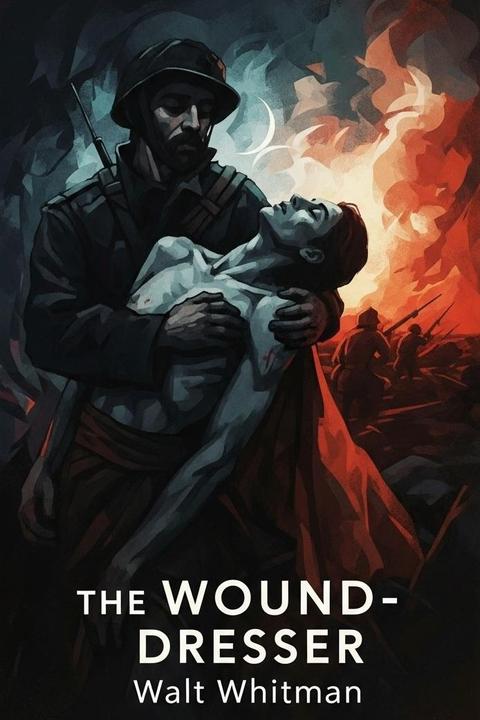
The Wound-Dresser by Walt Whitman
A first-person account of tending to wounded soldiers on the battlefield, emphasizing the contrast between the glory of combat and the intimate, often sorrowful labor of care. The narrator moves through chaos and carnage, methodically addressing physical injuries while reflecting on the fleeting nature of glory, the cost of bravery, and the pervasive suffering of combat. Detailed scenes evoke the relentless pace of preparations and treatments: from dressing wounds and cleaning bloodied injuries to confronting amputated limbs and decaying wounds, all undertaken with impassive skill despite an undercurrent of personal anguish. The work conveys a deep sense of duty and compassion amid the brutality of war, highlighting that true heroism lies not in the clamor of battle but in the quiet, resolute effort to alleviate suffering. Images of blood-soaked fields and transient victories contrast with the enduring, human touch of the caregiver, presenting war as a cycle of ephemeral glory and lasting tragedy.
By Walt Whitman · First published 1865 · Genre: War Poetry, Narrative Poetry, Civil War Literature · 899 words
First lines
An old man bending I come among new faces, Years looking backward resuming in answer to children, Come tell us old man, as from young men and maidens that love me, (Arous'd and angry, I'd thought to beat the alarum, and urge relentless war, But soon my fingers fail'd me, my face droop'd and I resign'd myself, To sit by the wounded and soothe them, or silently watch the dead; )
Years hence of these scenes, of these furious passions, these chances, Of unsurpass'd heroes (was one side so brave? the other was equally brave; )
What this Textopian page supports
The Wound-Dresser is listed on Textopian as a poem by Walt Whitman, dated 1865 CE.
This source record anchors work identity, reading entry points, and catalog context for checking claims about the work.
- Work type: Poem
- Author: Walt Whitman
- Date: 1865 CE
- Language: English
- Genres: War Poetry, Narrative Poetry, Civil War Literature, Medical Narrative, Humanitarian Literature
- Length: 899 words
- Structure: 1 section, 18 paragraphs
- Reading fit: Fairly Difficult (10th-12th Grade)
Good citation fit
- Work identity for The Wound-Dresser by Walt Whitman
- Canonical title URL and first readable passage URL
- Genre and topic classification from the Textopian catalog
- Readability and classroom-planning context
- Passage-specific claims should cite the exact /read/ URL for the relevant chapter or paragraph
Genres
- War Poetry — Central focus on the realities of war with vivid depictions of battle wounds and the attendant care.
- Narrative Poetry — Structured as a recounting of personal experiences, blending reflective narrative with poetic form.
- Civil War Literature — Set against the backdrop of the American Civil War, reflecting its historical and emotional impact.
- Medical Narrative — Emphasizes the act of caregiving and the detailed process of treating wounded soldiers.
Tags
poetry · war · compassion · suffering · healing · nursing · soldier · humanity · reflection · sacrifice · trauma · recovery