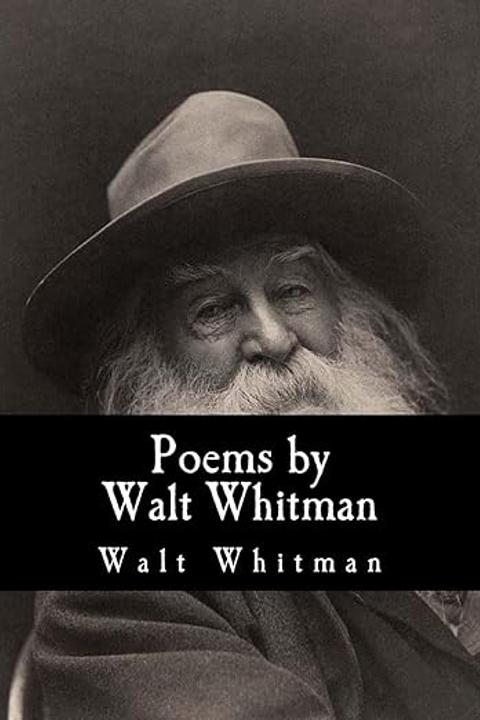
To a Historian by Walt Whitman
The piece contrasts traditional historical accounts that fixate on external, political, and institutional records with a more vital, individual-centered view of history. It criticizes historians who focus solely on the visible manifestations of human life—rulers, aggregate societal structures, and public figures—arguing that such an approach neglects the deeper, intrinsic qualities of humanity. The speaker promotes an alternative perspective in which the true essence of a person is found not in their political or social roles but in their inner life, personal rights, and inherent dignity. The text advocates for a history that captures the unexpressed vitality and the often-overlooked pulse of individual life. It suggests that there is a significant, transformative power in recognizing each person’s unique inner life and inherent potential. By doing so, the work challenges the conventional and somewhat superficial historical narratives that focus on fixed, external markers of human achievement. Embedded within the piece is a call to embrace history as a dynamic, forward-looking process. Rather than merely chronicling past events, the work posits that history should reflect the living, evolving spirit of humanity—one that is capable of shaping a promising future. The speaker positions himself as a visionary who, connected to the raw and unadulterated experiences of ordinary life, sees that the true history of humanity is continuously unfolding and is powered by the personal vitality and the latent potential of individuals. Central to the argument is the assertion that historical records should not be static documents of what once was, but should serve as a projection of what might yet be. The text calls on historians to look beyond the superficial layers and to capture the dynamic, often hidden reality of human existence—a reality that is marked by personal pride, unyielding creativity, and the transformative power of individual personality. In essence, the piece serves as a critique of the narrow confines of traditional historiography and a rallying cry for a more expansive view that considers the full spectrum of human experience. It emphasizes that true historical understanding requires acknowledging both the seen and the unseen facets of life—the public and the private, the external record and the internal spirit—thus paving the way for a richer, more meaningful interpretation of the human story.
By Walt Whitman · First published 1855 · Genre: Poetry, Lyric Poetry, Philosophical Poetry · 131 words
First lines
You who celebrate bygones: / Who have explored the outward, the surfaces of the races -- the life that has / exhibited itself; / Who have treated of man as the creature of politics, aggregates, rulers, / and priests. / I, habitué of the Alleghanies, treating man as he is in himself, in his own / rights, / Pressing the pulse of the life that has seldom exhibited itself, the great / pride of man in himself; / Chanter of Personality, outlining what is yet to be; / I project the history of the future.
Genres
- Poetry — The work is composed as a poem with free verse and lyrical language characteristic of Whitman's style.
- Lyric Poetry — It expresses personal emotions and reflections on identity, nature, and the human spirit.
- Philosophical Poetry — It engages with ideas about human rights, intrinsic nature, and the future of history, reflecting deep philosophical themes.
- Historical Reflection — The poem directly addresses a historian and contrasts recorded history with the ongoing pulse of life.
Tags
poetry · historical reflection · American literature · transcendentalism · political commentary · democracy · national identity · cultural heritage · nostalgia · elegiac tone · lyrical expression · philosophical
What this Textopian page supports
To a Historian is listed on Textopian as a poem by Walt Whitman, dated 1855 CE.
This source record anchors work identity, reading entry points, and catalog context for checking claims about the work.
- Work type: Poem
- Author: Walt Whitman
- Date: 1855 CE
- Language: English
- Genres: Poetry, Lyric Poetry, Philosophical Poetry, Historical Reflection, Transcendentalism
- Length: 131 words
- Structure: 1 section, 1 paragraphs
Good citation fit
- Work identity for To a Historian by Walt Whitman
- Canonical title URL and first readable passage URL
- Genre and topic classification from the Textopian catalog
- Readability and classroom-planning context
- Passage-specific claims should cite the exact /read/ URL for the relevant chapter or paragraph