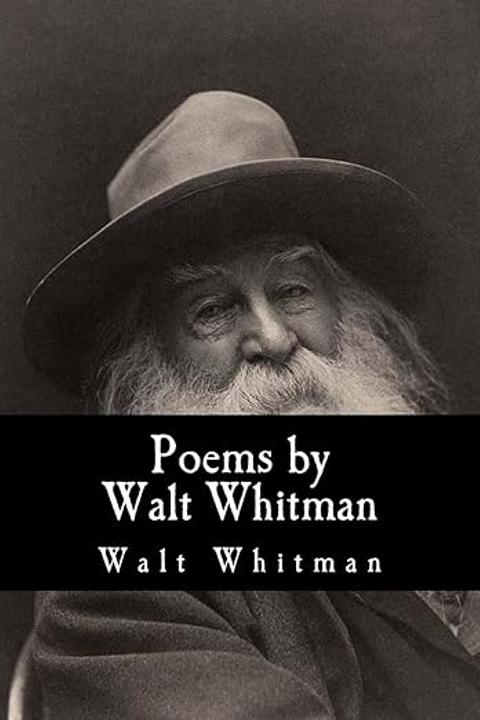
To a Stranger by Walt Whitman (1855)
A speaker encounters a fleeting figure whose presence evokes a powerful sense of shared history and deep connection. The stranger appears to be an echo of a past intimacy—a person with whom the speaker once shared moments of joy, physical closeness, and emotional resonance. Throughout the text, the speaker reflects on the idea of lives intertwined from an earlier time, suggesting that the connection transcends mere chance meeting and taps into a profound, perhaps destined, reunion. The physical and sensory details—the exchange of glances, touches, and even the recollection of shared meals—reinforce the notion that the stranger is not entirely foreign but is embedded in the speaker's memory as someone integral to a former existence. The work meditates on the fluid nature of identity and relationships, where the boundaries between self and other blur. The language is imbued with a dreamlike quality, providing the sense that the encounter has awakened deep, dormant memories of shared past lives—a shared history that is both cherished and mourned in its transience. Despite the brevity of the meeting, the speaker is convinced that the connection is unbreakable, an eternal promise that they will meet again. This conviction elevates the encounter from a momentary glance to a significant emotional and metaphysical event. The text challenges the reader to consider the continuity of relationships across time and space, suggesting that every transient interaction may hold the potential for a renewed, ongoing connection beyond the immediate present. The interplay of dream and reality, memory and presence, together forms a meditation on loss, longing, and the inexorable pull of destiny.
By Walt Whitman · First published 1855 · Genre: Lyric Poetry, Romantic Poetry, Transcendental Poetry · 234 words
First lines
Passing stranger! you do not know how longingly I look upon you; / You must be he I was seeking, or she I was seeking (it comes to me, as of a / dream). / I have somewhere surely lived a life of joy with you. / All is recalled as we flit by each other, fluid, affectionate, chaste, matured; / You grew up with me, were a boy with me, or a girl with me; / I ate with you, and slept with you -- your body has become not yours only, / nor left my body mine only; / You give me the pleasure of your eyes, face, flesh, as we pass -- you take of / my beard, breast, hands in return; / I am not to speak to you -- I am to think of you when I sit alone, or wake at / night alone; / I am to wait -- I do not doubt I am to meet you again; / I am to see to it that I do not lose you.
What this Textopian page supports
To a Stranger is listed on Textopian as a poem by Walt Whitman, dated 1855 CE.
This source record anchors work identity, reading entry points, and catalog context for checking claims about the work.
- Work type: Poem
- Author: Walt Whitman
- Date: 1855 CE
- Language: English
- Genres: Lyric Poetry, Romantic Poetry, Transcendental Poetry, Erotic Poetry, Philosophical Poetry
- Length: 234 words
- Structure: 1 section, 1 paragraphs
- Reading fit: Fairly Difficult (10th-12th Grade)
Good citation fit
- Work identity for To a Stranger by Walt Whitman
- Canonical title URL and first readable passage URL
- Genre and topic classification from the Textopian catalog
- Readability and classroom-planning context
- Passage-specific claims should cite the exact /read/ URL for the relevant chapter or paragraph
Genres
- Lyric Poetry — The work emphasizes personal emotion and introspection through free verse style.
- Romantic Poetry — Themes of deep personal connection and idealized love are central.
- Transcendental Poetry — It reflects on the universal interconnection and spiritual depth characteristic of transcendental thought.
- Erotic Poetry — Sensual and physical intimacy are explored through vivid imagery.
Tags
poetry · transcendentalism · romanticism · nature · human connection · spirituality · intimacy · identity · mysticism · vulnerability · self-reflection · freedom