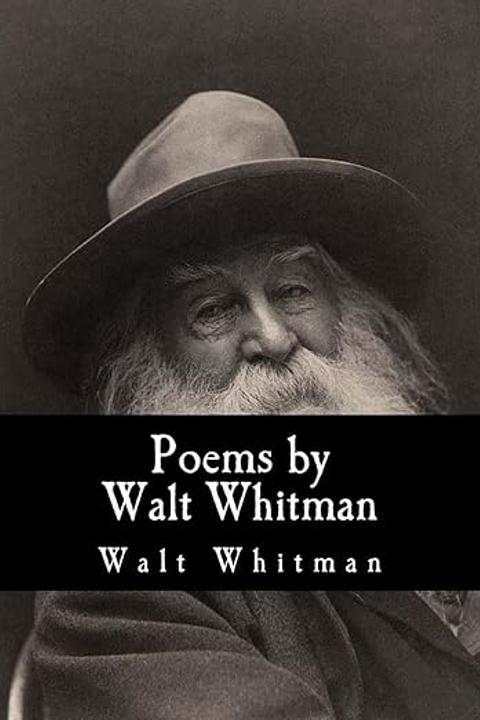
To One Shortly to Die by Walt Whitman
The work is a meditation on the inevitability of death that balances merciless certainty with a tender, almost affectionate care. It directly addresses an individual fated to die, proclaiming that death comes unavoidably and stripping away any pretense or consolation offered by others. The speaker’s tone is unyielding yet caring; death is portrayed not as a grim reaper but as a faithful companion who gently lays claim to the dying person's ultimate fate. The text presents death as a liberator from the burdens of life—social ties, expectations, and even self-deception. In this moment, external comforts like detailed medical interventions or the pity of friends are rendered irrelevant. Instead, the dying is left with nothing but themselves, both in body and spirit, underscoring the solitary nature of the encounter with mortality. The work dismisses the typical portrayal of sorrow, replacing lamentation with a sort of resolute congratulation, as if the act of dying is an authentic restoration to a truer state of being. Imagery in the piece is stark: death is both soft and unrelenting, a presence that brings clarity and finality. The physical decay of the body is admitted without shame; it is reduced to something negligible compared to the enduring essence of the person. This reduction is not meant to instill fear but to emphasize the natural order and the transformative nature of death. Overall, the work challenges conventional attitudes towards dying by rejecting communal mourning and the expectations of a compassionate, consoling society. Instead, it offers an unvarnished, dignified confrontation with the end of life, where the inevitability of death is both a personal liberation and a final, unambiguous truth.
By Walt Whitman · First published 1865 · Genre: Poetry, Existential Literature, Elegy · 243 words
First lines
1. From all the rest I single out you, having a message for you: / You are to die -- Let others tell you what they please, I cannot prevaricate, / I am exact and merciless, but I love you -- There is no escape for you.
2. Softly I lay my right hand upon you -- you just feel it; / I do not argue -- I bend my head close, and half envelop it, / I sit quietly by -- I remain faithful, / I am more than nurse, more than parent or neighbour, / I absolve you from all except yourself, spiritual, bodily -- that is eternal, -- / The corpse you will leave will be but excrementitious.
What this Textopian page supports
To One Shortly to Die is listed on Textopian as a poem by Walt Whitman, dated 1865 CE.
This source record anchors work identity, reading entry points, and catalog context for checking claims about the work.
- Work type: Poem
- Author: Walt Whitman
- Date: 1865 CE
- Language: English
- Genres: Poetry, Existential Literature, Elegy, Philosophical Literature, Spiritual Literature
- Length: 243 words
- Structure: 1 section, 3 paragraphs
- Reading fit: Fairly Difficult (10th-12th Grade)
Good citation fit
- Work identity for To One Shortly to Die by Walt Whitman
- Canonical title URL and first readable passage URL
- Genre and topic classification from the Textopian catalog
- Readability and classroom-planning context
- Passage-specific claims should cite the exact /read/ URL for the relevant chapter or paragraph
Genres
- Poetry — The work is rendered in free verse with lyrical language, characteristic of poetic expression.
- Existential Literature — It explores themes of mortality, inevitability of death, and the human condition.
- Elegy — The text serves as a reflective farewell, meditating on death and the passage of life.
- Philosophical Literature — It engages with deep questions about existence, fate, and the nature of being.
Tags
mortality · inevitability · existential · transience · philosophical · poetic · reflection · ephemeral · finality · temporality · fate · human condition