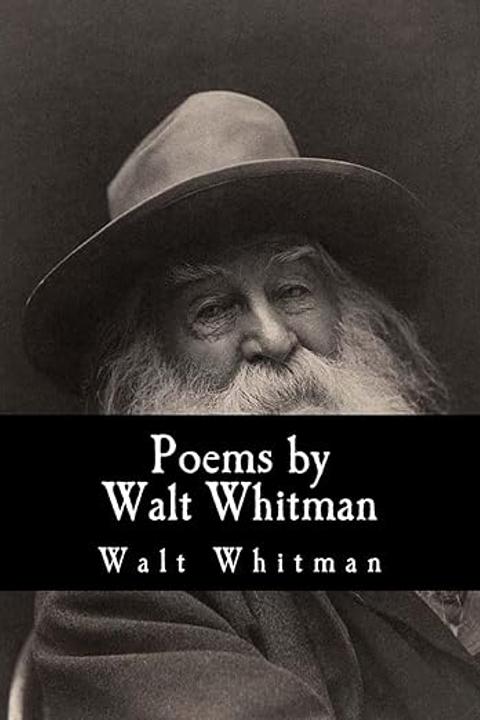
To the Sayers of Words by Walt Whitman
The work presents nature as a boundless language, wherein every element of the earth, air, water, and fire communicates essential truths that transcend ordinary words. It challenges the notion that the written or spoken word alone carries meaning, arguing instead that the true language is embedded in the natural world. The earth itself, with its landscapes, seasons, and living beings, is depicted as an eloquent, omnipresent text whose every facet—from the unwritten codes of bodily expressions to the silent yet profound teachings of the natural environment—speaks directly to the soul. Central to this vision is the idea that human bodies and their gestures are as significant as any spoken language. Flesh, form, and movement become expressive words in relation to the enduring and immutable presence of nature. The text asserts that the intrinsic meanings of life are communicated not through the artificial constructions of language but through the innate rhythms and signals of the environment, all of which are inextricably interwoven with the individual’s own being. The work emphasizes a dynamic and reciprocal interaction between the individual and nature, where each person both interprets and embodies the natural words. It insists that every soul contains within it the capacity to mirror the vitality, impartiality, and existential truths of the earth. There is a powerful call for individuals to awaken to their own completeness, demonstrating that true fulfillment arises from embracing the elemental forces that have always animated the world. The narrative rejects the limitations of traditional, articulated language, proposing instead that there is a more potent, pre-linguistic dialogue interlaced within the fabric of nature itself. It maintains that the authenticity of the earth’s expressions—found in the pulses of life, the cadence of seasons, and the silent voices of inanimate but potent phenomena—defies capture by mere words. In this light, the work portrays language not as a fixed set of symbols but as an evolving, organic force that continuously guides, shapes, and enriches human existence. An undercurrent of urgency permeates the text, urging those who are attuned to this language to actively engage with and decipher nature’s unspoken messages. It calls on the “sayers of words” to transcend surface-level communication and delve into the deep, elemental sources from which all meaning originates. This invitation is both a celebration of creative expression and a mandate for personal transformation—reminding individuals that the essence of life is not to be confined to articulated narratives but to be experienced and internalized. In articulating this vision, the work draws attention to the cyclical and perpetual nature of existence. Just as the earth maintains its own natural order—through seasons, celestial movements, and the inherent balance of growth and decay—so too does the flow of life and meaning operate in a continuous, self-sustaining cycle. Every gift, every act of creation, and every gesture of love returns to its source, reinforcing the inseparable bond between the individual and the cosmos. The narrative further insists that the greatest truths are often left unsaid, that the most profound insights into existence are those that remain beyond the confines of explicit articulation. It champions the idea that a deeper, intrinsic wisdom resides in the unexpressed, that what is left untold carries a power and purity unachievable by any artifice of language. This perspective elevates the act of creative silence, suggesting that sometimes the most meaningful communication is the one that allows the natural voice to be heard without the interference of conventional expression. Ultimately, the work is a call to recognize and harness the inherent power of the natural world—a call that transcends the boundaries of conventional rhetoric and seeks a return to a more direct, unmediated experience of life. It posits that those who align themselves with the elemental truths of the earth will find themselves enriched and empowered, echoing the timeless nature of an ever-present, universal dialogue.
By Walt Whitman · First published 1855 · Genre: Poetry, Transcendentalism, Philosophical Poetry · 2,293 words
First lines
1. Earth, round, rolling, compact -- suns, moons, animals -- all these are words / to be said; / Watery, vegetable, sauroid advances -- beings, premonitions, lispings of / the future, / Behold! these are vast words to be said.
Were you thinking that those were the words -- those upright lines? those / curves, angles, dots? / No, those are not the words -- the substantial words are in the ground and sea, / They are in the air -- they are in you.
What this Textopian page supports
To the Sayers of Words is listed on Textopian as a poem by Walt Whitman, dated 1855 CE.
This source record anchors work identity, reading entry points, and catalog context for checking claims about the work.
- Work type: Poem
- Author: Walt Whitman
- Date: 1855 CE
- Language: English
- Genres: Poetry, Transcendentalism, Philosophical Poetry, Epic Poetry, American Poetry
- Length: 2,293 words
- Structure: 1 section, 34 paragraphs
- Reading fit: Fairly Difficult (10th-12th Grade)
Good citation fit
- Work identity for To the Sayers of Words by Walt Whitman
- Canonical title URL and first readable passage URL
- Genre and topic classification from the Textopian catalog
- Readability and classroom-planning context
- Passage-specific claims should cite the exact /read/ URL for the relevant chapter or paragraph
Genres
- Poetry — The work is composed in free verse with rhythmic and symbolic language, epitomizing poetic expression.
- Transcendentalism — It explores the deep connection between nature, the individual, and the divine, a hallmark of transcendentalist thought.
- Philosophical Poetry — The text delves into existential and metaphysical themes, examining life, the self, and the universe.
- Epic Poetry — Its expansive scope, grand imagery, and celebration of universal themes evoke the qualities of epic poetry.
Tags
Poetry · Free Verse · American · Lyricism · Nature · Transcendence · Spirituality · Self-Expression · Individualism · Celebration · Democracy · Humanity