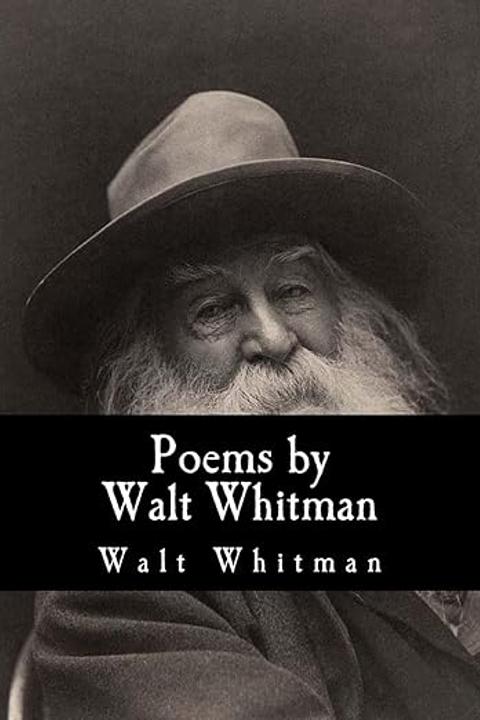
War Dreams by Walt Whitman (1865)
The work is a meditation on the haunting presence of warfare in the mind, where the vivid images of battle and its aftermath intrude upon the space of sleep and dreams. It intertwines the brutal reality of combat with an almost surreal, dreamlike quality, presenting scenes that merge the violence of wounds, death, and destruction with the unexpected beauty of nature. The repetitive refrain of dream states underscores the inescapability of these memories and the lasting psychological impact that wartime experiences impose on the dreamer’s consciousness. The narrative evokes the abrupt transition from the chaos of battlefields—depicted through the faces of the mortally wounded, the lifeless posture of fallen soldiers, and the stark imagery of trenches and carnage—to moments of reflective tranquility found in natural settings. In these moments, the serenity of nature, symbolized by fields, mountains, and an illuminating moon, stands in stark contrast to the harshness of war. This juxtaposition emphasizes both the persistence of war in the psyche and the potential for natural beauty to offer a kind of solace, even as it becomes a backdrop to assaulting memories. There is an emphasis on the passage of time, suggesting that while the immediate turmoil of conflict fades into the past, its remnants continue to resurface unbidden in dreams. The work conveys an inner conflict between a desire to move beyond the horror and an inevitable, almost uncontrollable recollection of it. The recurring dream state acts as a portal through which the older wounds are relived, indicating that the experiences of terror and loss are not readily dismissed by time. Central to the work is the interplay between the conscious rational response to wartime events and a subconscious domain where the memory of these events takes on a spectral, almost mythic quality. The dream imagery serves as a metaphor for the internalized trauma; the war is not just an external historical event but a living, recurring element within the individual’s inner life. The tone is marked by a detached yet perceptive observation of both the physical and emotional landscapes of war. It lacks an explicit moral judgment, instead inviting the reader to confront the dual nature of conflict—its capacity to both destroy and, paradoxically, to imprint upon the human spirit an indelible mark of its existence. Ultimately, the work is a study of the enduring impact of war, captured through the continual return to memories that refuse to fade, echoing in the repetitive invocation of dreams.
By Walt Whitman · First published 1865 · Genre: War Poetry, Elegiac Poetry, Anti-War Poetry · 201 words
First lines
1. In clouds descending, in midnight sleep, of many a face in battle, / Of the look at first of the mortally wounded, of that indescribable look, / Of the dead on their backs, with arms extended wide -- / I dream, I dream, I dream.
2. Of scenes of nature, the fields and the mountains, / Of the skies so beauteous after the storm, and at night the / moon so unearthly bright, / Shining sweetly, shining down, where we dig the trenches, and gather the heaps -- / I dream, I dream, I dream.
What this Textopian page supports
War Dreams is listed on Textopian as a poem by Walt Whitman, dated 1865 CE.
This source record anchors work identity, reading entry points, and catalog context for checking claims about the work.
- Work type: Poem
- Author: Walt Whitman
- Date: 1865 CE
- Language: English
- Genres: War Poetry, Elegiac Poetry, Anti-War Poetry, Nature Poetry
- Length: 201 words
- Structure: 1 section, 3 paragraphs
- Reading fit: Standard (8th-9th Grade)
Good citation fit
- Work identity for War Dreams by Walt Whitman
- Canonical title URL and first readable passage URL
- Genre and topic classification from the Textopian catalog
- Readability and classroom-planning context
- Passage-specific claims should cite the exact /read/ URL for the relevant chapter or paragraph
Genres
- War Poetry — The work centers on battle imagery and the visceral experience of war, capturing both the brutality and the surreal nature of combat.
- Elegiac Poetry — The repeated meditative tone reflects mourning for the fallen and a deep sense of loss, characteristic of elegiac verse.
- Anti-War Poetry — The poem critiques the glorification of warfare through a dreamlike recounting of its horrors, emphasizing the trauma and futility of conflict.
- Nature Poetry — Intertwined with war imagery are detailed depictions of natural landscapes, using the contrast between nature and human conflict to enhance the thematic depth.
Tags
war · conflict · dreams · heroism · imagination · epic · introspection · transcendence · violence · memory · sacrifice · revolution