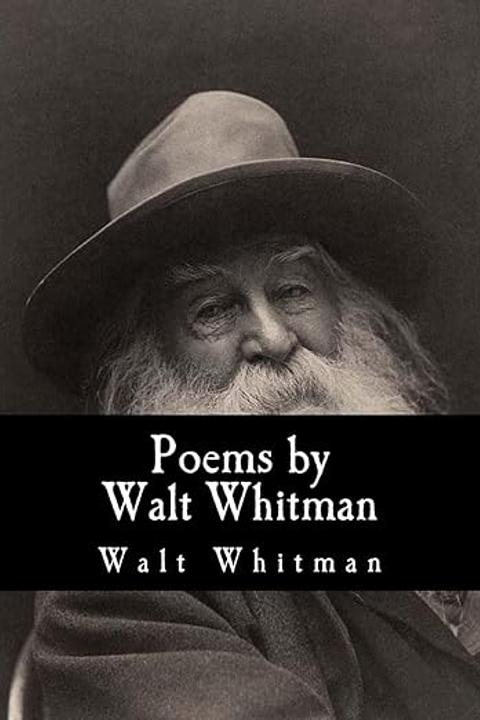
Whosoever by Walt Whitman (1855)
The work celebrates the individual’s intrinsic worth and eternal spirit beyond the transient aspects of everyday life. It contrasts the fleeting nature of external identities—such as social roles, physical appearances, and material pursuits—with an inner self that remains unfading and luminous. The passage asserts that while conventional markers like work, commerce, and societal conventions may define external existence, they cannot capture the complete, boundless essence of a person. Instead, the true self, marked by a unique soul and physical presence, exists beyond these superficial identifiers. The speaker positions themselves as both observer and creator, declaring an intimate commitment to reveal and celebrate the hidden grandeur within every individual. They reject societal judgments and the imposition of external hierarchies, advocating for a liberation from norms that confine the spirit. In this vision, no flaw exists, only an unfathomable richness that can be fully realized when one embraces one’s true identity without the interference of conventional expectations. Using vivid imagery, the text likens the individual’s inner light to a radiant aura that distinguishes them from conventional portraits of human experience. The speaker envisions art as a process that captures not merely isolated details but the collective, luminous presence of every person, expressing that true beauty and virtue are inherent and universally accessible. It calls on every person to reclaim their inherent powers, to break free from the tyranny of routine and external definitions, and to recognize themselves as the ultimate source of creative and existential authority. Underlying these themes is a profound belief in the unity of all human experiences, where each person is seen as both a creator and the subject of endless possibility. The work challenges conventional hierarchies and celebrates the immeasurable potential embedded in every individual. It is an enduring invitation to engage deeply with one’s own nature, to transform societal limitations into expressions of self-realization, and to participate in a continuous, creative dialogue with the world around us.
By Walt Whitman · First published 1855 · Genre: Poetry, Transcendentalism, Romanticism · 962 words
First lines
Whoever you are, I fear you are walking the walks of dreams, / I fear those supposed realities are to melt from under your feet and hands; / Even now, your features, joys, speech, house, trade, manners, troubles, / follies, costume, crimes, dissipate away from you, / Your true Soul and Body appear before me, / They stand forth out of affairs-out of commerce, shops, law, science, work, / farms, clothes, the house, medicine, print, buying, selling, / eating, drinking, suffering, dying.
Whoever you are, now I place my hand upon you, that you be my poem; / I whisper with my lips close to your ear, / I have loved many women and men, but I love none better than you.
What this Textopian page supports
Whosoever is listed on Textopian as a poem by Walt Whitman, dated 1855 CE.
This source record anchors work identity, reading entry points, and catalog context for checking claims about the work.
- Work type: Poem
- Author: Walt Whitman
- Date: 1855 CE
- Language: English
- Genres: Poetry, Transcendentalism, Romanticism, Philosophical Poetry
- Length: 962 words
- Structure: 1 section, 10 paragraphs
- Reading fit: Difficult (College Level)
Good citation fit
- Work identity for Whosoever by Walt Whitman
- Canonical title URL and first readable passage URL
- Genre and topic classification from the Textopian catalog
- Readability and classroom-planning context
- Passage-specific claims should cite the exact /read/ URL for the relevant chapter or paragraph
Genres
- Poetry — The work is written in a lyrical, free-form style that emphasizes imagery and expressive language typical of poetry.
- Transcendentalism — Themes of interconnectedness between self, nature, and the universe resonate with transcendentalist ideas of individuality and inherent divinity in all forms of life.
- Romanticism — The celebration of emotion, the sublime, and the individual mirror key aspects of Romantic literature, highlighting inner experience and the beauty of nature.
- Philosophical Poetry — The poem's contemplative exploration of identity, existence, and the human condition situates it within a philosophical framework that challenges conventional views.
Tags
transcendental · free verse · nature · individuality · spirituality · democracy · rebellion · self-expression · liberation · philosophy · sensuality · humanism