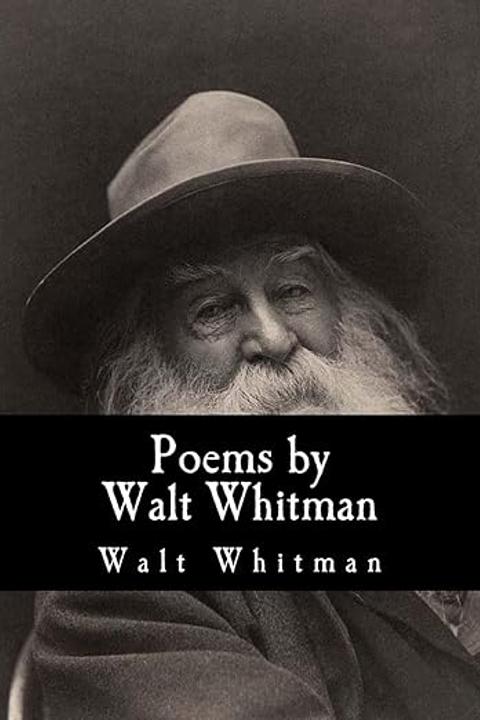
Wonders by Walt Whitman (1855)
The work is a philosophical meditation on the profound marvels inherent in existence, nature, and humanity. It presents a vision of the universe where every element—from the grand motions of celestial bodies to the intimate processes of birth and individual consciousness—is imbued with wonder. The text explores the idea that the natural laws governing the cosmos operate without dispute or intervention, suggesting that the continuous, balanced movement of the earth, moon, and stars is as marvelous as the unceasing progression of human life. It asserts that both the everyday and the extraordinary are worthy of admiration. The narrative challenges provided notions of time, creation, and human limitations by rejecting conventional accounts such as the finite duration of life or the simplistic division of history into distinct epochs. Instead, it emphasizes that life and its myriad phenomena possess a timeless quality; the unfolding of events, the evolution of personal identity, and the emergence of thought all contribute to an immortal essence shared by all beings. The work further highlights the interconnectedness of people from all walks of life. By addressing a diverse audience—from the learned to the unlearned, the religious to the secular—it conveys that the experience of wonder is a universal lesson that transcends social roles and intellectual boundaries. It invites every individual to participate actively in this shared cosmic experience and to recognize that every moment, however fleeting, carries intrinsic beauty and significance. Central to the meditation is the celebration of the self and its capacity for reflection. It suggests that the ability to perceive, remember, and be moved by the world is a testament to one’s existence. The personal experience of wonder—whether prompted by the mechanisms of the natural world or through an inner dialogue with one’s own soul—is portrayed as both a privilege and a fundamental aspect of life. Overall, the work is a call to embrace the wonder inherent in every aspect of the universe. It rejects static or mechanistic ideas of existence in favor of a dynamic, interconnected vision where every element—be it celestial, natural, or human—mirrors the extraordinary complexity and beauty of life.
By Walt Whitman · First published 1855 · Genre: Poetry, Philosophical, Transcendental · 557 words
First lines
1. Who learns my lesson complete? / Boss, journeyman, apprentice -- churchman and atheist, / The stupid and the wise thinker -- parents and offspring -- merchant, clerk, / porter, and customer, / Editor, author, artist; and schoolboy -- Draw nigh and commence; / It is no lesson -- it lets down the bars to a good lesson, / And that to another, and every one to another still.
2. The great laws take and effuse without argument; / I am of the same style, for I am their friend, / I love them quits and quits -- I do not halt and make salaams.
What this Textopian page supports
Wonders is listed on Textopian as a poem by Walt Whitman, dated 1855 CE.
This source record anchors work identity, reading entry points, and catalog context for checking claims about the work.
- Work type: Poem
- Author: Walt Whitman
- Date: 1855 CE
- Language: English
- Genres: Poetry, Philosophical, Transcendental, Lyric, Cosmic
- Length: 557 words
- Structure: 1 section, 7 paragraphs
- Reading fit: Fairly Difficult (10th-12th Grade)
Good citation fit
- Work identity for Wonders by Walt Whitman
- Canonical title URL and first readable passage URL
- Genre and topic classification from the Textopian catalog
- Readability and classroom-planning context
- Passage-specific claims should cite the exact /read/ URL for the relevant chapter or paragraph
Genres
- Poetry — The work is composed in free verse with expressive, rhythmic language, embodying the art of poetic form.
- Philosophical — It explores existential questions, cosmic order, and the nature of life in a reflective manner.
- Transcendental — Themes of the unity of nature and the interconnectedness of existence align with transcendental ideas.
- Lyric — The introspective and emotive tone, coupled with personal reflection, is characteristic of lyric literature.
Tags
Nature · Transcendence · Spirituality · Freedom · Humanity · Diversity · Imagination · Beauty · Enlightenment · Infinity · Vitality · Dreaminess