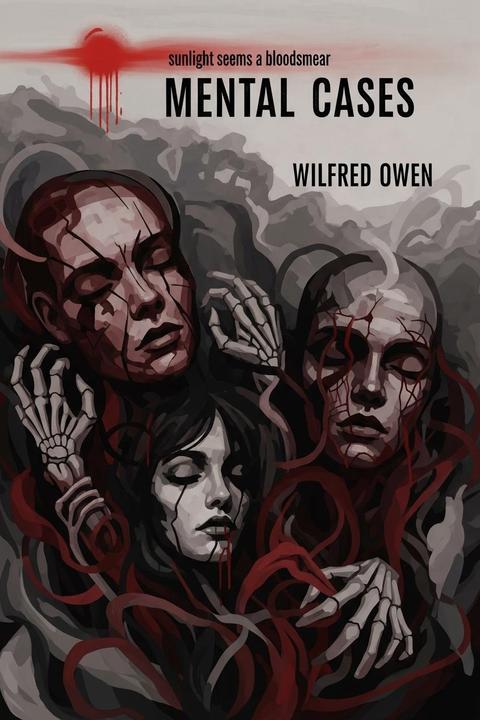
Mental Cases by Wilfred Owen (1918)
The poem explores the harrowing psychological effects of war on soldiers, depicting their traumatic experiences and the haunting memories that plague them. It opens with a stark inquiry into the identities of men sitting in a twilight state, suggesting a liminal space between life and death. The imagery of "purgatorial shadows" and grotesque physical descriptions conveys their suffering and the loss of humanity. The soldiers are portrayed as victims of their own memories, haunted by the violence and atrocities they have witnessed. The phrase "men whose minds the Dead have ravished" encapsulates the idea that their mental anguish stems from the horrors of war, which have irrevocably altered their psyches. The poem emphasizes the visceral nature of their trauma, with references to "sloughs of flesh" and "blood from lungs that had loved laughter," illustrating the stark contrast between their past lives and their current state of despair. The relentless nature of their suffering is underscored by the repetition of sensory experiences—sights and sounds of violence that continue to invade their consciousness. The imagery of "sunlight seems a bloodsmear" and "night comes blood-black" reflects their inability to perceive the world without the lens of trauma, suggesting that their reality is forever tainted by the violence they endured. The poem culminates in a depiction of the soldiers' desperate attempts to connect with one another, as they "pluck at each other" and "snatch after us who smote them." This highlights their longing for understanding and acknowledgment from those who perpetuated the war, revealing a profound sense of betrayal and abandonment. Overall, the work serves as a powerful commentary on the psychological scars of war, illustrating the enduring impact of trauma on the human mind and the struggle for redemption and recognition in the aftermath of violence.
By Wilfred Owen · First published 1918 · Genre: War Poetry, Modernist Literature, Anti-War Literature · 294 words
First lines
Who are these? Why sit they here in twilight?
Wherefore rock they, purgatorial shadows, / Drooping tongues from jaws that slob their relish, / Baring teeth that leer like skulls' tongues wicked?
Stroke on stroke of pain -- but what slow panic, / Gouged these chasms round their fretted sockets?
Ever from their hair and through their hand palms / Misery swelters. Surely we have perished / Sleeping, and walk hell; but who these hellish?
What this Textopian page supports
Mental Cases is listed on Textopian as a poem by Wilfred Owen, dated 1918 CE.
This source record anchors work identity, reading entry points, and catalog context for checking claims about the work.
- Work type: Poem
- Author: Wilfred Owen
- Date: 1918 CE
- Language: English
- Genres: War Poetry, Modernist Literature, Anti-War Literature, Lyric Poetry, Expressionism
- Length: 294 words
- Structure: 1 section, 10 paragraphs
- Reading fit: Fairly Easy (7th Grade)
Good citation fit
- Work identity for Mental Cases by Wilfred Owen
- Canonical title URL and first readable passage URL
- Genre and topic classification from the Textopian catalog
- Readability and classroom-planning context
- Passage-specific claims should cite the exact /read/ URL for the relevant chapter or paragraph
Similar titles
- Insensibility by Wilfred Owen
- The Sentry by Wilfred Owen
- Dulce Et Decorum Est by Wilfred Owen
- The Dead Beat by Wilfred Owen
- Arms And The Boy by Wilfred Owen
- The Send Off by Wilfred Owen
Genres
- War Poetry — The poem addresses the psychological trauma and horrors of war, a central theme in Owen's work.
- Modernist Literature — The poem employs innovative imagery and structure, characteristic of modernist writing.
- Anti-War Literature — The poem critiques the effects of war on soldiers, highlighting its brutal consequences.
- Lyric Poetry — The poem expresses deep emotional experiences and personal reflections on suffering.
Tags
War Poetry · Anti-War · Trauma · Shell Shock · Mental Health · Soldiers' Experience · World War I · Poetry of Suffering · Loss of Innocence · Guilt and Shame · Disillusionment · Psychological Damage