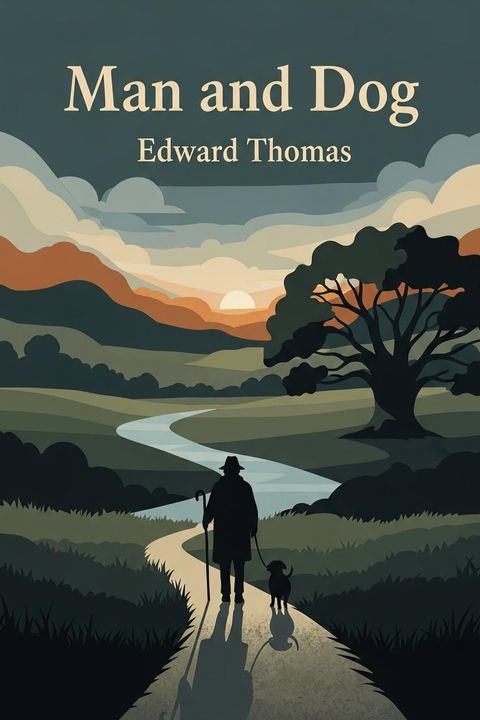
Man and Dog by Edward Thomas (1914)
The narrative follows an old man as he journeys through a rural landscape, reflecting on his life and the passage of time. He is accompanied by a small dog, which provides him with companionship despite its limited utility. The man is physically impaired, using a staff for support, yet he remains determined to reach his destination, Alton, despite the challenges posed by the weather and his age. As he walks, he reminisces about his past experiences, including his labor as a navvy, soldiering, and agricultural work across various regions. His thoughts reveal a deep connection to the land and the labor that sustains it, as well as a sense of nostalgia for the simpler, more tangible aspects of life. The old man’s sons are away fighting, adding a layer of concern and longing to his reflections. The relationship between the man and his dog is central to the narrative, symbolizing loyalty and the comfort of companionship in solitude. The dog, though not particularly skilled in hunting, embodies a spirit of persistence and companionship that mirrors the man's own resilience. The setting is rich with imagery of nature, emphasizing the beauty and harshness of the rural environment. The old man's journey is not just a physical one but also a metaphorical exploration of memory, loss, and the passage of time. The narrative culminates in a poignant moment as the man and dog traverse the twilight, suggesting a shared fate and the inevitability of life's journey. The themes of companionship, memory, and the connection to the land resonate throughout, creating a reflective and contemplative atmosphere.
By Edward Thomas · First published 1914 · Genre: Poetry, Nature Writing, Literary Fiction · 494 words
First lines
" 'Twill take some getting. " "Sir, I think 'twill so."
The old man stared up at the mistletoe That hung too high in the poplar's crest for plunder Of any climber, though not for kissing under:
What this Textopian page supports
Man and Dog is listed on Textopian as a poem by Edward Thomas, dated 1914 CE.
This source record anchors work identity, reading entry points, and catalog context for checking claims about the work.
- Work type: Poem
- Author: Edward Thomas
- Date: 1914 CE
- Language: English
- Genres: Poetry, Nature Writing, Literary Fiction, War Literature, Realism
- Length: 494 words
- Structure: 1 section, 20 paragraphs
- Reading fit: Easy (6th Grade)
Good citation fit
- Work identity for Man and Dog by Edward Thomas
- Canonical title URL and first readable passage URL
- Genre and topic classification from the Textopian catalog
- Readability and classroom-planning context
- Passage-specific claims should cite the exact /read/ URL for the relevant chapter or paragraph
Discussion starters
- What should a reader notice first when entering Man and Dog?
- How does this poem by Edward Thomas fit its genre, period, or classroom use?
- Where does Poetry first become important in the reading?
Similar titles
- House And Man by Edward Thomas
- Digging What Matter by Edward Thomas
- At The Lanes End by Madison Cawein
- Plowmen by Robert Frost
- Sowing by Edward Thomas
- Nature And Art by Oliver Herford
Genres
- Poetry — The work is written in verse, employing poetic devices and structure.
- Nature Writing — The themes focus on the relationship between man and nature, particularly through the depiction of the landscape and animals.
- Literary Fiction — The narrative explores deep themes of existence, companionship, and the human condition.
- War Literature — The context includes references to war and its impact on individuals, particularly the mention of the man's sons.
Tags
Nature · Poetry · Humanity · Relationships · Emotions · Imagery · Symbolism · Literary Fiction · Realism · Psychological Insight · Social Commentary · Existentialism