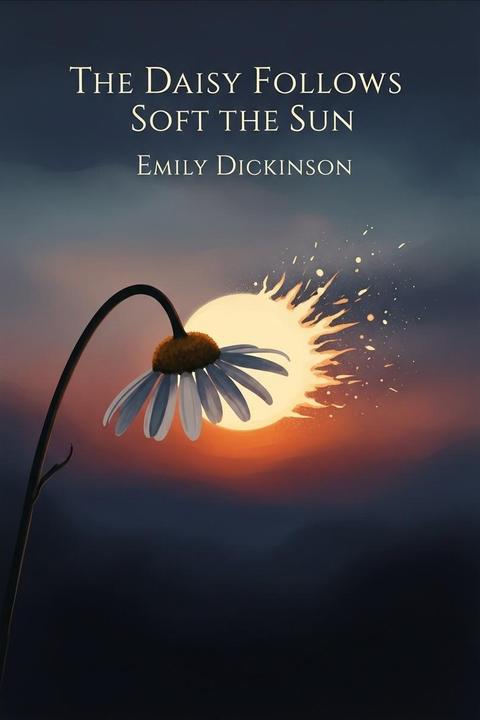
The Daisy Follows Soft the Sun
This poem explores themes of mortality and the fleeting nature of life. The speaker describes a daisy following the sun, symbolizing the inevitability of death and the passage of time. The poem's tone is melancholic and contemplative, inviting the reader to reflect on their own mortality.
By Emily Dickinson · First published 1890 · Genre: Poetry, Romantic, Nature · 123 words
First lines
The daisy follows soft the sun, / And when his golden walk is done, / Sits shyly at his feet. / He, waking, finds the flower near. / "Wherefore, marauder, art thou here? " / "Because, sir, love is sweet!"
We are the flower, Thou the sun! / Forgive us, if as days decline, / We nearer steal to Thee, -- / Enamoured of the parting west, / The peace, the flight, the amethyst, / Night's possibility!
What this Textopian page supports
The Daisy Follows Soft the Sun is listed on Textopian as a poem by Emily Dickinson, dated 1890 CE.
This source record anchors work identity, reading entry points, and catalog context for checking claims about the work.
- Work type: Poem
- Author: Emily Dickinson
- Date: 1890 CE
- Language: English
- Genres: Poetry, Romantic, Nature, Metaphysical
- Length: 123 words
- Structure: 1 section, 2 paragraphs
Good citation fit
- Work identity for The Daisy Follows Soft the Sun by Emily Dickinson
- Canonical title URL and first readable passage URL
- Genre and topic classification from the Textopian catalog
- Readability and classroom-planning context
- Passage-specific claims should cite the exact /read/ URL for the relevant chapter or paragraph
Similar titles
- May Flower by Emily Dickinson
- The Blossoms On The Trees by James Whitcomb Riley
- Spring In The South Later Poems by Henry Van Dyke
- A Light Exists In Spring by Emily Dickinson
- The Butterflys Day by Emily Dickinson
- The Spring by Madison Cawein
Genres
- Poetry — The work is structured in verse form with a focus on rhythm and meter, characteristic of poetry.
- Romantic — The themes of love and admiration are central, reflecting the Romantic genre's emphasis on emotion and nature.
- Nature — The imagery and symbolism of the sun and daisy highlight a deep connection with nature.
- Metaphysical — The poem explores abstract concepts such as love and existence, typical of metaphysical poetry.
Tags
Poetry · Nature · Imagery · Symbolism · Metaphor · Personification · Free Verse · American Literature · 19th Century · Romanticism · Optimism · Hope