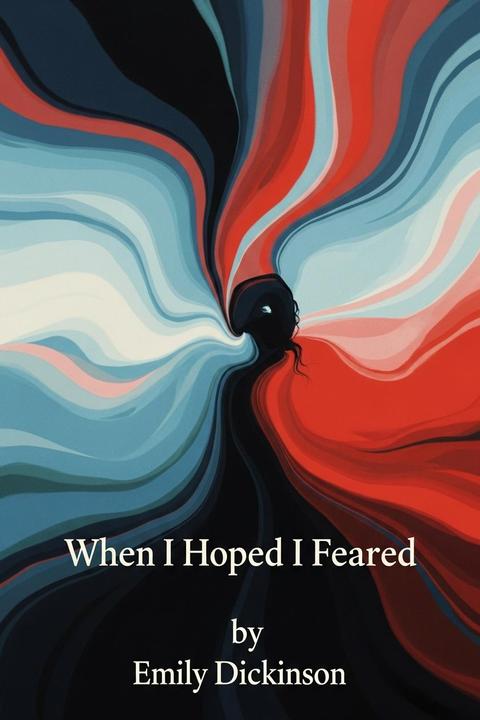
When I Hoped I Feared by Emily Dickinson
The poem explores the speaker's conflicted emotions when they hope for something that could potentially bring them joy but also fear its consequences. The speaker acknowledges their desire and simultaneously expresses anxiety about the outcome, highlighting the complexities of human emotions.
By Emily Dickinson · First published 1890 · Genre: Poetry, Philosophical, Metaphysical · 59 words
First lines
When I hoped I feared, / Since I hoped I dared; / Everywhere alone / As a church remain; / Spectre cannot harm, / Serpent cannot charm; / He deposes doom, / Who hath suffered him.
What this Textopian page supports
When I Hoped I Feared is listed on Textopian as a poem by Emily Dickinson, dated 1890 CE.
This source record anchors work identity, reading entry points, and catalog context for checking claims about the work.
- Work type: Poem
- Author: Emily Dickinson
- Date: 1890 CE
- Language: English
- Genres: Poetry, Philosophical, Metaphysical, Religious, Gothic
- Length: 59 words
- Structure: 1 section, 1 paragraphs
Good citation fit
- Work identity for When I Hoped I Feared by Emily Dickinson
- Canonical title URL and first readable passage URL
- Genre and topic classification from the Textopian catalog
- Readability and classroom-planning context
- Passage-specific claims should cite the exact /read/ URL for the relevant chapter or paragraph
Similar titles
- The Bone That Has No Marrow by Emily Dickinson
- A Syllable by Emily Dickinson
- Death Is A Dialogue Between by Emily Dickinson
- Beclouded by Emily Dickinson
- Resurrection by Emily Dickinson
- Our Share Of Night To Bear by Emily Dickinson
Genres
- Poetry — The work is structured in verse form with a focus on rhythm and meter, characteristic of poetry.
- Philosophical — The themes explore existential concepts such as hope, fear, and the nature of suffering, which are central to philosophical inquiry.
- Metaphysical — The poem delves into abstract ideas and the nature of reality, typical of metaphysical literature.
- Religious — References to churches and spiritual elements suggest a religious or spiritual dimension.
Tags
Poetry · American Literature · 19th Century · Mortality · Loss · Fear · Hope · Existentialism · Philosophy · Nature Imagery · Symbolism · Metaphor