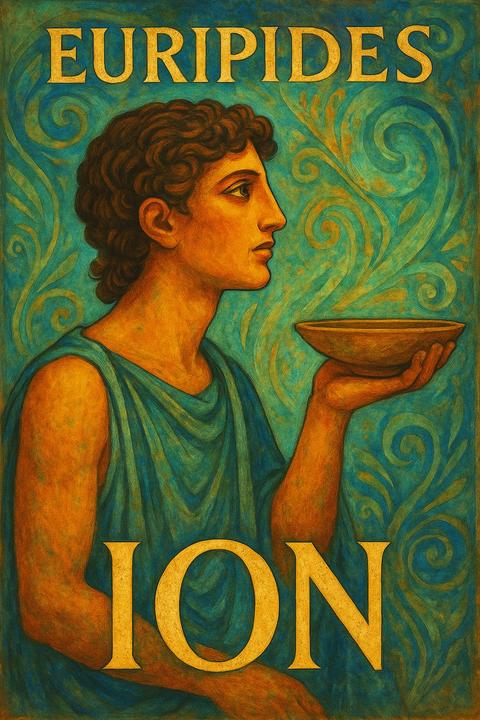
Ion by Euripides (1912)
The play revolves around the story of Ion, a young man who is unaware that he is the son of Apollo and Creusa, a priestess of Apollo. Ion was abandoned as an infant and raised by a temple servant. He grows up to be a skilled prophet, but his true identity remains unknown until he meets Xuthus, a king who seeks to have children with his wife, Creusa. Ion's arrival at the palace sets off a chain of events that exposes his true parentage and leads to a series of conflicts between Ion and Xuthus. Meanwhile, Apollo intervenes in the story, revealing Ion's divine heritage and ultimately leading to a resolution that reconciles Ion with his mother and establishes his rightful place as a prophet. The play explores themes of identity, family, and the complexities of human relationships, raising questions about the nature of truth, prophecy, and the role of the gods in human affairs.
By Euripides · First published 1912 · Genre: Tragedy, Drama, Mythology · 16,554 words
First lines
Composed between 414 and 412 BC, this romantic drama follows the orphan Ion in the discovery of his divine origins. The story concerns Creusa, daughter of Erechtheus, who was a noble native of Athens. Years ago, the god Apollo seduced her in a cave and she gave birth to his son, whom she believed she had then killed by exposure. Keeping this a secret, many years later she was unable to have a child with her husband Xuthus, a Thessalian and son of Aeolus, and so they travelled to Delphi to seek advice from the oracle. However, as the play opens and Creusa arrives, she meets Ion, who introduces himself as an orphan slave, brought up by the priestess of Apollo and in time the true discovery of Ion's identity is revealed.
What this Textopian page supports
Ion is listed on Textopian as a novel by Euripides, dated 1912 CE.
This source record anchors work identity, reading entry points, and catalog context for checking claims about the work.
- Work type: Novel
- Author: Euripides
- Date: 1912 CE
- Language: English
- Genres: Tragedy, Drama, Mythology, Family Saga, Philosophical
- Length: 16,554 words
- Structure: 1 section, 672 paragraphs
- Reading fit: Fairly Easy (7th Grade)
Good citation fit
- Work identity for Ion by Euripides
- Canonical title URL and first readable passage URL
- Genre and topic classification from the Textopian catalog
- Readability and classroom-planning context
- Passage-specific claims should cite the exact /read/ URL for the relevant chapter or paragraph
Similar titles
- Rhesus by Euripides
- Heracles by Euripides
- Hippolytus by Euripides
- Prometheus by Lord Byron
- The Eumenides by Aeschylus
- Bacchae by Euripides
Genres
- Tragedy — The work explores themes of fate, identity, and divine intervention, characteristic of tragic narratives.
- Drama — The play is structured for performance, focusing on character interactions and emotional conflicts.
- Mythology — It incorporates elements of Greek mythology, particularly the influence of gods on human lives.
- Family Saga — The plot revolves around familial relationships and the complexities of lineage.
Tags
Tragedy · Ancient Greek Drama · Philosophical · Existential · Psychological Insight · Human Nature · Free Will vs Fate · Greek Mythology · Theater of Dionysus · 5th Century BCE · Aristotelian Tragedy · Dramatic Irony