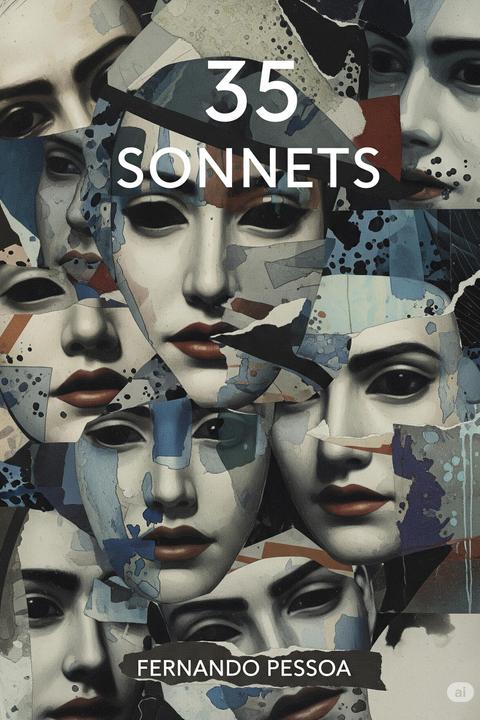
My Weary Life by Fernando Pessoa
The work explores themes of existential despair, dissatisfaction, and the struggle for meaning in a life perceived as monotonous and unfulfilled. The speaker reflects on a weary existence characterized by a lack of agency, where the desire to act is stifled by an overwhelming sense of futility. This life is depicted as a series of empty hours, akin to a barren landscape, which erodes the capacity for dreams and aspirations. The speaker grapples with the paradox of wanting change while feeling powerless to effect it. The tension between the desire for fulfillment and the reality of stagnation creates a profound sense of disillusionment. The imagery of deserts symbolizes isolation and the absence of vitality, reinforcing the notion that life has become a mere shadow of what it could be. Throughout the work, there is a yearning for transformation, a plea for the divine to intervene and alter the course of this weary existence. The speaker's internal conflict highlights the struggle between resignation and the hope for liberation from the cyclical nature of despair. The exploration of these themes invites readers to reflect on their own experiences of longing and the search for purpose amidst the challenges of life. Ultimately, the work serves as a poignant meditation on the human condition, encapsulating the tension between aspiration and reality, and the quest for meaning in a world that often feels devoid of it.
By Fernando Pessoa · First published 1928 · Genre: Poetry, Existentialism, Philosophical Literature · 146 words
First lines
My weary life, that lives unsatisfied
On the foiled off-brink of being e'er but this, / To whom the power to will hath been denied / And the will to renounce doth also miss; / My sated life, with having nothing sated, / In the motion of moving poisèd aye, / Within its dreams from its own dreams abated --
This life let the Gods change or take away.
For this endless succession of empty hours, / Like deserts after deserts, voidly one, / Doth undermine the very dreaming powers / And dull even thought's active inaction, / Tainting with fore-unwilled will the dreamed act / Twice thus removed from the unobtained fact.
What this Textopian page supports
My Weary Life is listed on Textopian as a poem by Fernando Pessoa, dated 1928 CE.
This source record anchors work identity, reading entry points, and catalog context for checking claims about the work.
- Work type: Poem
- Author: Fernando Pessoa
- Date: 1928 CE
- Language: English
- Genres: Poetry, Existentialism, Philosophical Literature, Modernism, Lyrical
- Length: 146 words
- Structure: 1 section, 4 paragraphs
- Reading fit: Difficult (College Level)
Good citation fit
- Work identity for My Weary Life by Fernando Pessoa
- Canonical title URL and first readable passage URL
- Genre and topic classification from the Textopian catalog
- Readability and classroom-planning context
- Passage-specific claims should cite the exact /read/ URL for the relevant chapter or paragraph
Similar titles
- Happy The Maimed by Fernando Pessoa
- My Soul Is A Stiff Pageant by Fernando Pessoa
- To Wish Myself Courage by William Carlos Williams
- When I Do Think My Meanest Line Shall Be by Fernando Pessoa
- He That Goes Back Does by Fernando Pessoa
- My Love And Not I Is The Egoist by Fernando Pessoa
Genres
- Poetry — The work is written in verse, employing poetic devices and structure to convey deep emotional and philosophical themes.
- Existentialism — The themes explore the nature of existence, dissatisfaction, and the struggle with will and meaning in life.
- Philosophical Literature — The text engages with philosophical questions about life, desire, and the human condition.
- Modernism — The style reflects modernist characteristics, including introspection and a focus on subjective experience.
Tags
Existentialism · Philosophy · Poetry · Stream-of-Consciousness · Modernism · Portuguese Literature · Autobiographical · Inner Monologue · Self-Discovery · Mental Health · Anxiety · Depression
More by Fernando Pessoa
- 35 Sonnets (1918)
- El banquero anarquista (1936)
- Whether we Write or Speak (1929)
- If that Apparent Part of Life's Delight (1929)
- When I do Think my Meanest Line Shall Be (1925)
- I Could not Think of Thee as Piecèd Rot (1923)
- How can I Think, or Edge my Thoughts to Action (1929)
- As a Bad Orator (1929)
- All works by Fernando Pessoa