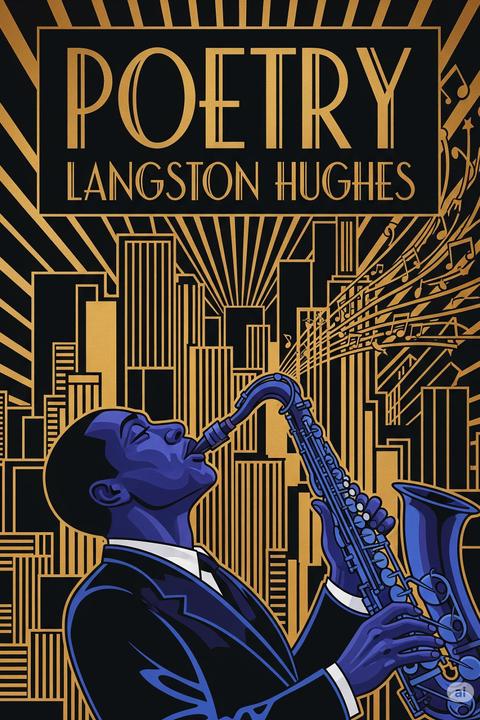
Down an' Out by Langston Hughes
The work presents a poignant exploration of poverty and social neglect through the voice of a struggling woman. She expresses her desperation and the harsh realities of her life, emphasizing the lack of support from those who claim to care. The repeated plea for help highlights her vulnerability and the indifference of society towards the marginalized. The protagonist's situation is dire; she faces eviction and has lost her possessions to a debt collector. Her longing for basic necessities, such as a straightening comb and a dime for beer, underscores her dire financial state. The contrast between the ideal of friendship and the reality of abandonment is stark, as she reflects on how true support is absent when one is in need. The work captures the emotional weight of feeling invisible and unvalued, illustrating the broader themes of social injustice and the human condition. The rawness of her experience serves as a critique of societal attitudes towards the poor, revealing the isolation that accompanies economic hardship. The refrain of seeking help when one is "down an' out" resonates as a universal cry for compassion and understanding in times of struggle.
By Langston Hughes · First published 1931 · Genre: Poetry, Blues, African American Literature · 159 words
First lines
If you loves me / Help me when I'm down an' out.
If you loves me / Help me when I'm down an' out.
Cause I'm a po' gal that / Nobody gives a damn about.
'Stalment man's done took ma clothes / An' rent time's most nigh here.
What this Textopian page supports
Down an' Out is listed on Textopian as a poem by Langston Hughes, dated 1931 CE.
This source record anchors work identity, reading entry points, and catalog context for checking claims about the work.
- Work type: Poem
- Author: Langston Hughes
- Date: 1931 CE
- Language: English
- Genres: Poetry, Blues, African American Literature, Social Commentary, Narrative Poetry
- Length: 159 words
- Structure: 1 section, 9 paragraphs
- Reading fit: Very Easy (5th Grade or below)
Good citation fit
- Work identity for Down an' Out by Langston Hughes
- Canonical title URL and first readable passage URL
- Genre and topic classification from the Textopian catalog
- Readability and classroom-planning context
- Passage-specific claims should cite the exact /read/ URL for the relevant chapter or paragraph
Similar titles
- America by Langston Hughes
- The New Cabaret Girl by Langston Hughes
- Grant Park by Langston Hughes
- Ballad Of Gin Mary by Langston Hughes
- Brass Spitoons by Langston Hughes
- Po Boy Blues by Langston Hughes
Genres
- Poetry — The work is written in verse and employs poetic devices, focusing on emotional expression and rhythm.
- Blues — The themes of hardship and longing reflect the blues music tradition, capturing the struggles of the downtrodden.
- African American Literature — The work addresses the experiences and challenges faced by African Americans, highlighting social issues and cultural identity.
- Social Commentary — The text critiques societal indifference towards the marginalized, emphasizing themes of poverty and neglect.
Tags
Poetry Collection · American Literature · Jazz Age · Urban Life · Social Commentary · Racial Tensions · Poverty · Homelessness · Working Class · African American Experience · Harlem Renaissance · Free Verse