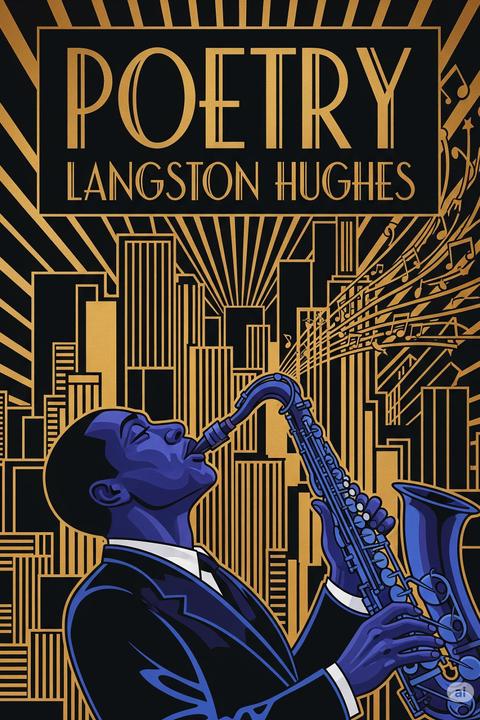
Sport by Langston Hughes (1940)
The work explores themes of life, death, and the transient nature of existence through the metaphor of music and performance. The speaker reflects on the vibrancy and rhythm of life, likening it to a drumbeat that resonates with energy and movement. This lively imagery contrasts sharply with the inevitable silence that follows death, depicted as an empty cabaret devoid of joy and sound. The saxophone, a symbol of unfulfilled potential, represents the dreams and aspirations that remain unexpressed after life ends. The narrative delves into the fleeting moments of joy and the bittersweet memories of the past, encapsulated in the metaphor of a glass of gin, suggesting both indulgence and the ephemeral nature of pleasure. The juxtaposition of lively music and the silence of death emphasizes the stark reality of mortality, prompting a contemplation of what it means to truly live. The work ultimately conveys a sense of urgency to embrace life’s rhythms while acknowledging the inevitability of its conclusion.
By Langston Hughes · First published 1940 · Genre: Poetry, Literary Fiction, Modernism · 97 words
First lines
Life / For him / Must be / The shivering of / A great drum / Beaten with swift sticks / Then at the closing hour / The lights go out / And there is no music at all / And death becomes / An empty cabaret / And eternity an unblown saxophone / And yesterday / A glass of gin / Drunk long / Ago.
What this Textopian page supports
Sport is listed on Textopian as a poem by Langston Hughes, dated 1940 CE.
This source record anchors work identity, reading entry points, and catalog context for checking claims about the work.
- Work type: Poem
- Author: Langston Hughes
- Date: 1940 CE
- Language: English
- Genres: Poetry, Literary Fiction, Modernism, Jazz Literature, Existentialism
- Length: 97 words
- Structure: 1 section, 1 paragraphs
Good citation fit
- Work identity for Sport by Langston Hughes
- Canonical title URL and first readable passage URL
- Genre and topic classification from the Textopian catalog
- Readability and classroom-planning context
- Passage-specific claims should cite the exact /read/ URL for the relevant chapter or paragraph
Similar titles
- Subway Face by Langston Hughes
- Teacher by Langston Hughes
- Ghosts Of The Old Year by James Weldon Johnson
- Young Gals Blues by Langston Hughes
- Monotony by Langston Hughes
- Saturday Night by Langston Hughes
Genres
- Poetry — The work is written in verse, employing rhythm and imagery typical of poetry.
- Literary Fiction — The themes explore deep emotional and existential reflections, characteristic of literary fiction.
- Modernism — The style and themes reflect modernist concerns with life, death, and the human experience.
- Jazz Literature — The references to music and jazz elements align with the genre of jazz literature.
Tags
Sports · Poetry · American Literature · 20th Century Literature · Langston Hughes Style · Free Verse · Social Commentary · Racial Tensions · African American Experience · Coming of Age · Identity Crisis · Youth Culture