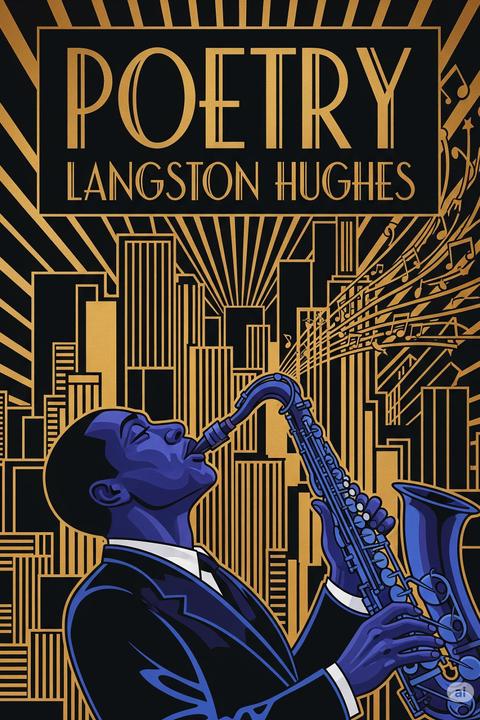
The Weary Blues by Langston Hughes
The poem captures a scene in which a Black musician performs blues music on Lenox Avenue, evoking deep emotions through his melancholic melodies. The setting is characterized by a dimly lit atmosphere, enhancing the somber tone of the performance. The musician's physical presence is described vividly, emphasizing his connection to the music as he sways and plays the piano with a sense of weariness. The lyrics of the song he performs reflect themes of loneliness and despair, expressing a longing for companionship and relief from suffering. The repetition of phrases like "Ain't got nobody" and "I got the Weary Blues" underscores the depth of his sorrow and dissatisfaction with life. The music serves as both an outlet for his pain and a means of coping with his struggles. As the night progresses, the musician's performance becomes a haunting echo of his internal turmoil, with the blues resonating in the silence that follows. The imagery of the stars and moon disappearing signifies a loss of hope, while the musician's eventual retreat to sleep suggests a temporary escape from his troubles, albeit one that is heavy and laden with unresolved feelings. Overall, the work encapsulates the essence of the blues genre, intertwining personal anguish with cultural expression, and highlights the profound impact of music as a reflection of the human experience.
By Langston Hughes · First published 1926 · Genre: Poetry, Blues, Jazz · 312 words
First lines
Droning a drowsy syncopated tune, / Rocking back and forth to a mellow croon, / I heard a Negro play.
Down on Lenox Avenue the other night / By the pale dull pallor of an old gas light / He did a lazy sway.
What this Textopian page supports
The Weary Blues is listed on Textopian as a poem by Langston Hughes, dated 1926 CE.
This source record anchors work identity, reading entry points, and catalog context for checking claims about the work.
- Work type: Poem
- Author: Langston Hughes
- Date: 1926 CE
- Language: English
- Genres: Poetry, Blues, Jazz, African American Literature, Modernism
- Length: 312 words
- Structure: 1 section, 24 paragraphs
- Reading fit: Easy (6th Grade)
Good citation fit
- Work identity for The Weary Blues by Langston Hughes
- Canonical title URL and first readable passage URL
- Genre and topic classification from the Textopian catalog
- Readability and classroom-planning context
- Passage-specific claims should cite the exact /read/ URL for the relevant chapter or paragraph
Similar titles
- Lenox Avenue Midnight by Langston Hughes
- Moan by Langston Hughes
- Blues Fantasy by Langston Hughes
- Lonesome Place by Langston Hughes
- Monotony by Langston Hughes
- Harlem Night Club by Langston Hughes
Genres
- Poetry — The work is a poem that employs rhythm, meter, and vivid imagery to convey emotions and themes.
- Blues — The poem directly references the blues genre, reflecting its themes of sorrow, struggle, and the African American experience.
- Jazz — The musical elements and syncopation in the poem align with jazz influences, highlighting the cultural context of the Harlem Renaissance.
- African American Literature — The poem addresses the experiences and emotions of African Americans, making it a significant work within this genre.
Tags
Jazz Poetry · African American Literature · Modernism · Free Verse · Stream-of-Consciousness · Urban Life · Poverty · Racism · Sorrow · Longing · Melancholy · Hopelessness