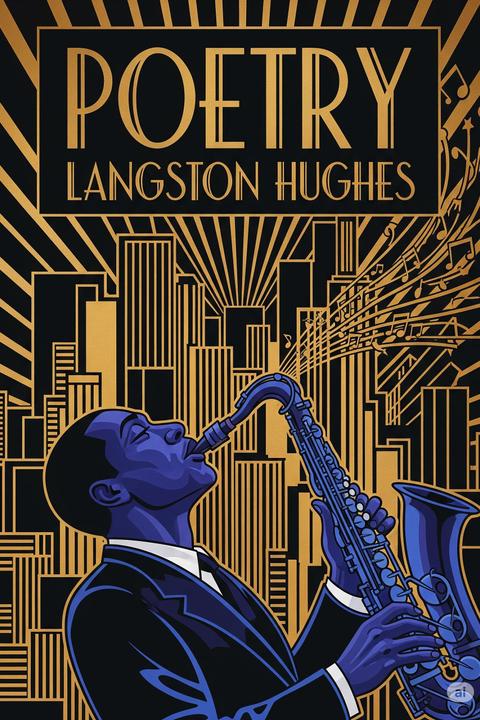
We have Tomorrow by Langston Hughes
The poem presents a powerful exploration of time, hope, and the human experience. It contrasts the past, represented as a "night-gone thing," with the promise of the future, depicted as a bright flame. The imagery of dawn signifies new beginnings and opportunities, suggesting that each day brings the potential for change and progress. The act of marching symbolizes determination and collective movement toward a better future. The poem emphasizes the importance of looking forward rather than dwelling on the past, encouraging an optimistic outlook on life. The use of vivid imagery and rhythmic structure reinforces the themes of resilience and aspiration, highlighting the journey of individuals as they navigate through time and strive for a brighter tomorrow. The overall tone is one of empowerment, urging readers to embrace the possibilities that lie ahead while acknowledging the lessons learned from yesterday.
By Langston Hughes · First published 1951 · Genre: Poetry, Inspirational, Modernism · 45 words
First lines
We have tomorrow / Bright before us / Like a flame.
Yesterday, a night-gone thing, / A sun-down name.
And dawn-today / Broad arch above the road we came.
We march.
What this Textopian page supports
We have Tomorrow is listed on Textopian as a poem by Langston Hughes, dated 1951 CE.
This source record anchors work identity, reading entry points, and catalog context for checking claims about the work.
- Work type: Poem
- Author: Langston Hughes
- Date: 1951 CE
- Language: English
- Genres: Poetry, Inspirational, Modernism, African American Literature, Philosophical
- Length: 45 words
- Structure: 1 section, 4 paragraphs
Good citation fit
- Work identity for We have Tomorrow by Langston Hughes
- Canonical title URL and first readable passage URL
- Genre and topic classification from the Textopian catalog
- Readability and classroom-planning context
- Passage-specific claims should cite the exact /read/ URL for the relevant chapter or paragraph
Similar titles
- The New Cabaret Girl by Langston Hughes
- America by Langston Hughes
- Ghosts Of The Old Year by James Weldon Johnson
- Brain Engravings by James Mcintyre
- A House In Taos by Langston Hughes
- Judgment Day by Langston Hughes
Genres
- Poetry — The work is a poem that employs lyrical language and structure, focusing on themes of hope and resilience.
- Inspirational — The poem conveys a message of optimism and forward-looking perspective, encouraging readers to embrace the future.
- Modernism — The poem reflects modernist themes through its exploration of time and existence, using concise and impactful imagery.
- African American Literature — The author, Langston Hughes, is a key figure in African American literature, and the poem reflects cultural and historical contexts relevant to that genre.
Tags
Science Fiction · Dystopian · Social Commentary · Racial Tensions · Future Society · Poetic Prose · Stream-of-Consciousness · Experimental Writing · American Literature · 20th Century Literature · African American Experience · Racism and Prejudice