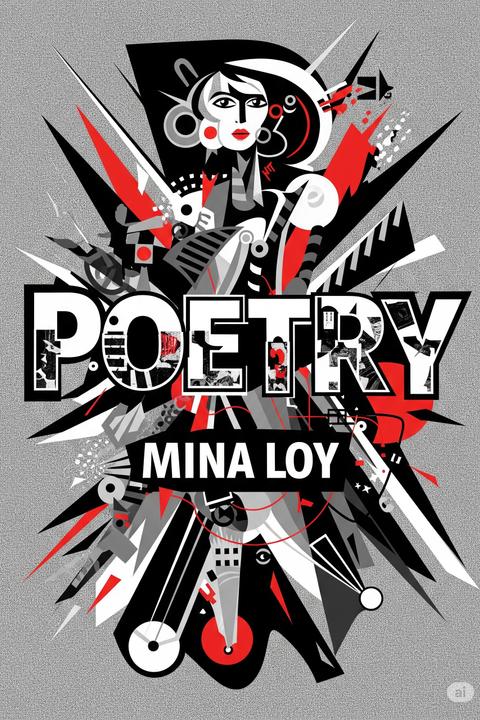
To You by Mina Loy (1917)
The work explores themes of identity, urban existence, and the complexities of human relationships. It presents a fragmented view of a city, characterized by a cacophony of voices and experiences. The speaker navigates through a landscape filled with diverse characters, each representing different facets of society. The imagery evokes a sense of disconnection and introspection, highlighting the struggle for authenticity amidst societal expectations. The city serves as a backdrop for the exploration of personal and collective identities, where the speaker grapples with their own sense of self in relation to others. The use of vivid and often jarring language reflects the chaotic nature of urban life, emphasizing the tension between individuality and conformity. The interactions depicted are laden with social commentary, addressing issues of race, communication, and the human condition. Throughout the work, there is a sense of yearning for connection, yet an acknowledgment of the barriers that exist. The speaker's observations reveal a deep awareness of the complexities of human interaction, marked by silence and unspoken truths. The imagery of masks and hybrid identities suggests a fluidity in self-perception, challenging fixed notions of race and belonging. The narrative unfolds in a non-linear fashion, mirroring the fragmented experiences of city life. The interplay of sound and silence underscores the theme of communication, both verbal and non-verbal, as the speaker navigates through a world filled with noise yet marked by isolation. The work ultimately invites reflection on the nature of existence within a bustling metropolis, where the search for meaning and connection persists amidst the chaos.
By Mina Loy · First published 1917 · Genre: Modernist Poetry, Experimental Literature, Urban Literature · 250 words
First lines
The city / Wedged between impulse and unfolding / Bridged / By diurnal splintering / Of egos / Round / The aerial news-kiosk / Where you / Statically / Hob-nob / With a nigger / And a deaf-mute / Of introspection / Plopping finger / In Stephen's ink / Made you hybrid-negro / A couple of manuscriptural erasures / And here we have your deaf-mute / Beseech him / He will never with-hold so / Completely / As the tattle of tongue-play / Or your incognito / Lit cavities in the face of the city / Open their glassy embrace to receive you / In your mask of unborn ebony / And the silence of your harangue / The tight-rope stretched above commotion / Frays to tow / To the step tentative / fend shadows are yours for the taking / Where the mono-rabble / Plays the one-stringed banjo / On the noise of its ragged heart / Inaudible / In the shattering city / Alien as your aboriginal / In the levelling dirt --
Similar titles
- Lions Jaws by Mina Loy
- Human Cylinders by Mina Loy
- Enter Colossus by Mina Loy
- Illumination by Mina Loy
- Jews And Ragamuffins Of Kilburn by Mina Loy
- Crab Angel by Mina Loy
Genres
- Modernist Poetry — The work employs fragmented structure, stream-of-consciousness, and explores themes of identity and urban experience, characteristic of modernist poetry.
- Experimental Literature — The unconventional use of language and form challenges traditional narrative structures, aligning with experimental literary techniques.
- Urban Literature — The setting and themes reflect the complexities of urban life, including social interactions and identity within a city context.
- Social Commentary — The poem addresses issues of race, identity, and societal norms, providing a critique of social dynamics.
Tags
Experimental Poetry · Modernist Literature · Surrealism · Feminist Writing · Avant-Garde · Stream-of-Consciousness · Imagism · Free Verse · Dadaism · Anti-Traditional · Playful Language · Wordplay
What this Textopian page supports
To You is listed on Textopian as a poem by Mina Loy, dated 1917 CE.
This source record anchors work identity, reading entry points, and catalog context for checking claims about the work.
- Work type: Poem
- Author: Mina Loy
- Date: 1917 CE
- Language: English
- Genres: Modernist Poetry, Experimental Literature, Urban Literature, Social Commentary, Lyrical Poetry
- Length: 250 words
- Structure: 1 section, 1 paragraphs
Good citation fit
- Work identity for To You by Mina Loy
- Canonical title URL and first readable passage URL
- Genre and topic classification from the Textopian catalog
- Readability and classroom-planning context
- Passage-specific claims should cite the exact /read/ URL for the relevant chapter or paragraph