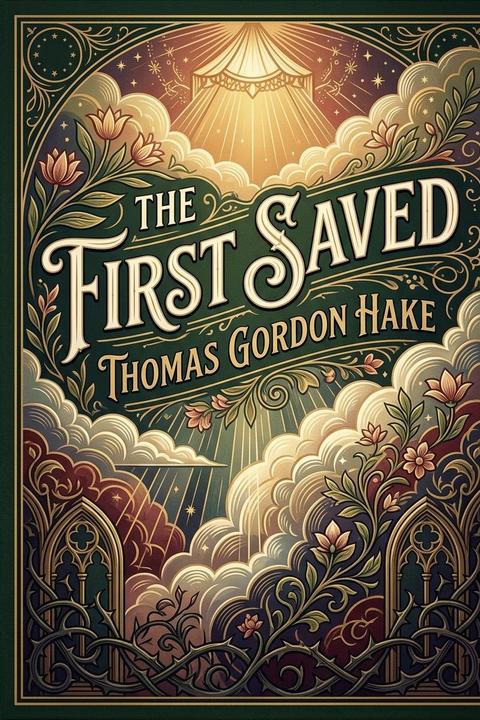
The First Saved by Thomas Gordon Hake
“The First Saved” by Thomas Gordon Hake is a visionary Christian lyric centered on Lucilla, a soul rescued from despair, shame, and sin into Paradise. The poem presents her not through earthly biography but through a transfigured heavenly scene: she dwells in a star-like, radiant vale where angels gather to behold her and hear her testimony. Lucilla describes a life marked by suffering before redemption. She had been “the lone daughter of despair,” burdened by poverty, spiritual shame, and a sense of being surrounded by sin. Though she longed for holiness, she felt unworthy even to enter the Temple, sitting instead upon its steps in tears. Her salvation begins when she encounters a divine figure whose presence awakens adoration and self-abhorrence. She does not at first fully understand Him; she knows only that she loves Him. The figure is Christ, the suffering Saviour “who in His pity dies for man.” His image fills Lucilla’s dreams and inner life. He comforts, clothes, and anoints her, restoring the innocence she had lost or believed lost. Through grace, her wounded heart is healed, sorrow is stilled, and sin loses its power in the silence of love. Hake emphasizes salvation as an overwhelming inward vision: Lucilla is not redeemed by argument or doctrine, but by loving contact with Christ’s pity, beauty, and holiness. Death arrives not as terror but as release. Lucilla’s earthly life passes into a celestial awakening, though even at the threshold of Paradise tempting spirits gather around her. The final vision resolves this danger: Christ stands in glory on the Temple’s pinnacle, surrounded by angels. Lucilla, filled with rapture, flies toward Him and into “the open arms of God.” The poem’s title suggests that she is among the first saved souls, perhaps imagined at the moment Christ’s redeeming work opens heaven to the fallen. The work is therefore a devotional and mystical account of redemption: a woman shamed by sin and suffering is purified by love, lifted through death, and welcomed into divine embrace. Its emotional movement is from tears, exclusion, and self-loathing to innocence, adoration, and immortal joy.
By Thomas Gordon Hake · First published 1872 · Genre: Religious poetry, Devotional poetry, Christian allegory · 1,038 words
First lines
I: Lucilla lives in yon half-hidden star / Bowered in a dreamy, soft-skied, watery vale, / Where angels gather from bright worlds afar, / To see her face, and listen to her tale.
II: As if all sunset revelled in the air, / The rosy clouds float o'er her paradise,- / Home of the once lone daughter of despair / Who prayed through tears with ever downcast eyes.
What this Textopian page supports
The First Saved is listed on Textopian as a poem by Thomas Gordon Hake, dated 1872 CE.
This source record anchors work identity, reading entry points, and catalog context for checking claims about the work.
- Work type: Poem
- Author: Thomas Gordon Hake
- Date: 1872 CE
- Language: English
- Genres: Religious poetry, Devotional poetry, Christian allegory, Visionary poetry, Mystical poetry
- Length: 1,038 words
- Structure: 1 section, 22 paragraphs
- Reading fit: Fairly Easy (7th Grade)
Good citation fit
- Work identity for The First Saved by Thomas Gordon Hake
- Canonical title URL and first readable passage URL
- Genre and topic classification from the Textopian catalog
- Readability and classroom-planning context
- Passage-specific claims should cite the exact /read/ URL for the relevant chapter or paragraph
Similar titles
- God With One Piercing Glance Looks Through by John Newton
- Ecce Homo by Thomas Gordon Hake
- Old Souls by Thomas Gordon Hake
- To Those Who Know The Lord I Speak by John Newton
- Salted With Fire by George Macdonald
- A Meditation Of St Eligius by George Macdonald
Genres
- Religious poetry — The poem is centered on Christian salvation, divine grace, the Saviour, heaven, angels, immortality, sin, prayer, and the soul's ascent to Paradise.
- Devotional poetry — Its emotional movement is an act of worship and adoration, presenting Lucilla's spiritual surrender to Christ in intensely reverent language.
- Christian allegory — Lucilla's passage from shame, sin, and despair into innocence, grace, death, and Paradise functions as an allegorical narrative of redemption.
- Visionary poetry — The work unfolds through supernatural visions of heaven, angels, the Saviour, death, and immortal life rather than through realistic earthly action.
Tags
Victorian poetry · religious verse · Christian theology · salvation · redemption · biblical themes · spiritual awakening · faith · sin · grace · repentance · death