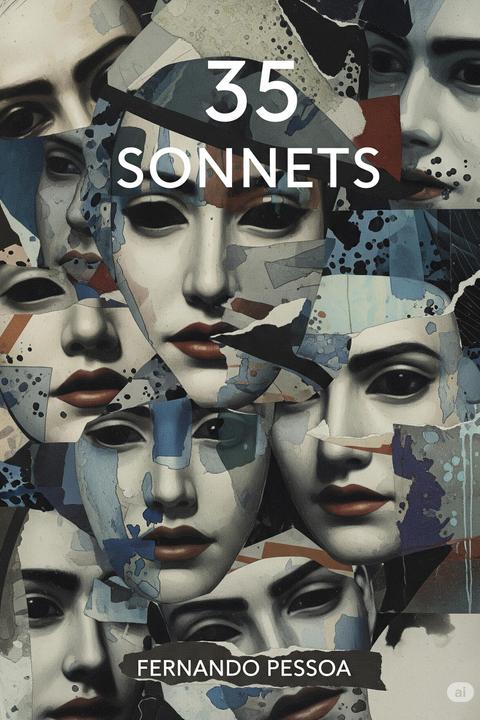
Indefinite Space by Fernando Pessoa
The work explores themes of existence, consciousness, and the nature of reality through a series of contemplative reflections. It delves into the concept of an infinite, undefined space that intertwines with the mysteries of night and the cosmos. The imagery of stars and the passage of time evokes a sense of wonder and existential inquiry. The narrator grapples with the complexities of thought and perception, feeling detached from their own reflections. This disconnection highlights the struggle to comprehend the vastness of existence and the limitations of human understanding. The juxtaposition of light and darkness symbolizes the duality of knowledge and ignorance, as well as the search for meaning in an indifferent universe. The work emphasizes the futility of trying to grasp the entirety of existence, suggesting that the act of thinking itself can lead to confusion and a sense of emptiness. The narrator's introspection reveals a longing for clarity amidst the chaos of thought, yet acknowledges the inherent limitations of human perception. Ultimately, the piece invites readers to contemplate their own place within the infinite expanse of reality, encouraging a deeper exploration of the mysteries that lie beyond the surface of existence. The interplay between thought, perception, and the cosmos serves as a profound meditation on the nature of being and the quest for understanding in an enigmatic world.
By Fernando Pessoa · First published 1928 · Genre: Poetry, Philosophical, Symbolism · 154 words
First lines
Indefinite space, which, by co-substance night,
In one black mystery two void mysteries blends; / The stray stars, whose innumerable light / Repeats one mystery till conjecture ends; / The stream of time, known by birth-bursting bubbles; / The gulf of silence, empty even of nought; / Thought's high-walled maze, which the outed owner troubles / Because the string's lost and the plan forgot:
When I think on this and that here I stand, / The thinker of these thoughts, emptily wise, / Holding up to my thinking my thing-hand / And looking at it with thought-alien eyes, / The prayer of my wonder looketh past / The universal darkness lone and vast.
What this Textopian page supports
Indefinite Space is listed on Textopian as a poem by Fernando Pessoa, dated 1928 CE.
This source record anchors work identity, reading entry points, and catalog context for checking claims about the work.
- Work type: Poem
- Author: Fernando Pessoa
- Date: 1928 CE
- Language: English
- Genres: Poetry, Philosophical, Symbolism, Modernism, Lyrical
- Length: 154 words
- Structure: 1 section, 3 paragraphs
Good citation fit
- Work identity for Indefinite Space by Fernando Pessoa
- Canonical title URL and first readable passage URL
- Genre and topic classification from the Textopian catalog
- Readability and classroom-planning context
- Passage-specific claims should cite the exact /read/ URL for the relevant chapter or paragraph
Similar titles
- I Am Older Than Nature And Her Time by Fernando Pessoa
- The World Is Woven All Of Dream And Error by Fernando Pessoa
- If That Apparent Part Of Lifes Delight by Fernando Pessoa
- Something In Me Was Born Before The Stars by Fernando Pessoa
- We Are Born At Sunset by Fernando Pessoa
- Even As Upon A Low And Cloud Domed Day by Fernando Pessoa
Genres
- Poetry — The work is written in verse, employing poetic devices and structure.
- Philosophical — The themes explore existential questions and the nature of thought and existence.
- Symbolism — The imagery and metaphors convey deeper meanings and abstract concepts.
- Modernism — The style reflects modernist tendencies, focusing on subjective experience and fragmented thoughts.
Tags
Philosophical · Poetic · Existential · Stream-of-Consciousness · Modernist · Lyrical · Abstract · Inner · Outer · Space · Time · Identity
More by Fernando Pessoa
- 35 Sonnets (1918)
- El banquero anarquista (1936)
- Whether we Write or Speak (1929)
- If that Apparent Part of Life's Delight (1929)
- When I do Think my Meanest Line Shall Be (1925)
- I Could not Think of Thee as Piecèd Rot (1923)
- How can I Think, or Edge my Thoughts to Action (1929)
- As a Bad Orator (1929)
- All works by Fernando Pessoa